How Does Workflow Monitoring Differ With Automation or Orchestration?
We compare automation and orchestration through decision ownership, cutover checks and monitoring so operations teams can choose a clear control boundary.
Quick Answer
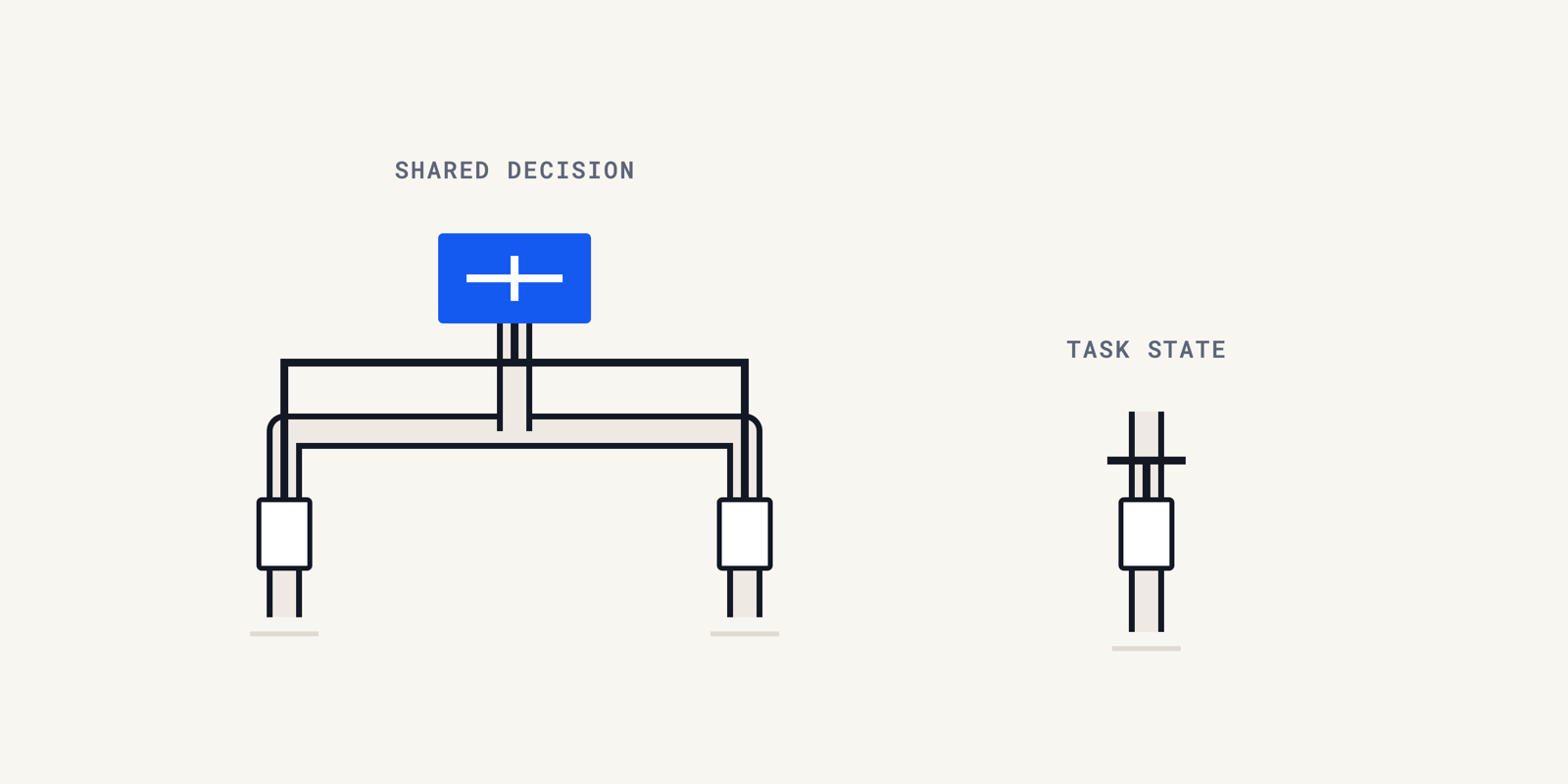
Choose orchestration when several automated tasks need shared decisions about order, waiting, recovery or approval. Keep independent work local when its owner can complete and recover it without coordinating another task. Before moving control, map each decision to its evidence, current owner and proposed owner. Test the transfer with unfinished work, then make monitoring show the next decision and the person or system authorized to make it.
Workflow orchestration coordinates automated tasks across systems. We use workflow monitoring to check who controls the next decision when those tasks depend on one another.
An operations dashboard can show several successful jobs while the team still cannot explain who should release the next step. Adding another controller can leave that responsibility less clear.
We would decide where coordination belongs before choosing software. We cover the decision boundary, the transfer of responsibility, and the monitoring needed to keep that responsibility visible.
Assign Shared Decisions Before Adding an Orchestrator
We would choose workflow orchestration when a decision needs state from several tasks and must survive their interruptions. We would first name that decision and its owner.
1. Map Decisions Instead of Counting Connected Applications
We start with an existing workflow and write down the decisions people or services currently make. A diagram of connected applications does not identify who decides what happens next.
IBM's comparison distinguishes individual automated work from coordination across tasks. We would turn that distinction into a review of the actual control decisions.
For each decision, we would identify its trigger, the information it reads, and the action it permits. We would also record what happens when that information is missing.
We would separate doing work from authorizing the next work. A service can retain its business rules while a coordinator manages the order in which services receive requests.
Our starting question is concrete. Can the current task owner decide safely using the state it already owns? If not, we would identify the missing dependency before introducing shared workflow state.
We would treat a diagram arrow as an unresolved question until it names a decision. “Then payment” leaves out who confirms readiness, records the request, and handles an unanswered call.
2. Compare the Boundaries That Need Control
We use this table to compare control arrangements. These are review criteria, not a claim that every automation product lacks coordination features.
| Decision Boundary | Independent Task Automation | Shared Orchestration |
|---|---|---|
| Starting work | The task's own trigger and prerequisites suffice | Progress depends on other tasks' recorded state |
| Waiting | The local owner can interpret the wait | Another participant's result changes the next step |
| Recovery | Repeating or repairing local work resolves the issue | Recovery changes decisions for other participants |
| Approval | Permission belongs entirely to the local action | Permission must release a coordinated transition |
| Ownership | One task owner can explain the outcome | A named coordinator must explain the process decision |
We would keep an independently recoverable task local even if it runs beside a complex process. Putting every helper script into a central service adds responsibility that needs a reason.
AWS's saga orchestration example coordinates order, inventory and payment services. Its compensating actions show why cross-service recovery is part of the design.
We would use that example to ask which earlier actions need attention after a later failure. A saga does not remove application complexity or provide transaction isolation automatically.
A state machine can make permitted transitions explicit. We would still ask who supplies the evidence for each transition and who maintains that rule when the business process changes.
We would also consider choreography, where participants react to events without one central process controller. The decision is about understandable responsibility, not treating central coordination as the only valid design.
3. Write the Decision Ownership Worksheet
We would complete the following worksheet before selecting an orchestrator. It is our proposed review method, intended to expose decisions that otherwise disappear between teams.
| Worksheet Field | What We Would Record |
|---|---|
| Decision | The specific permission, wait or recovery choice |
| Current owner | The service or named team making it now |
| Required evidence | Records and state needed to decide |
| Missing evidence | The condition that prevents a decision |
| Proposed owner | The component or team that will decide after migration |
| Authority transfer | The event that ends the old owner's permission to decide |
| In-flight rule | Which owner handles work already underway |
| Review proof | The record that shows who decided and why |
We would fill a row for each decision that crosses the proposed boundary. Empty cells stay unresolved; we would not replace a missing owner with the name of a tool.
Our review would bring together the people who own the task, the process and its exception handling. Each should be able to identify the same decision from the same records.
We would then remove unnecessary central decisions. If a coordinator merely repeats a service's private validation, we would ask why that rule cannot stay with its existing owner.
The completed worksheet should explain a workflow orchestration vs automation choice without relying on a vendor demo. It should also show what the proposed purchase would actually take responsibility for.
Pro tip: We would ask who loses authority when the new coordinator takes over. If nobody can name that change, the migration may add a second decision-maker.
Transfer Coordination Without Creating Competing Owners
We would transfer workflow orchestration decisions explicitly, including unfinished work. Moving a trigger alone does not establish who owns an already-started operation.
1. Preserve Unknown Results Before Allowing Recovery
We would distinguish a confirmed failure from a request whose result is unknown. The recovery decision needs evidence about the external effect, not just the caller's error.
Stripe's API v1 idempotency documentation explains how a repeated key returns a saved result, including errors. Its retention and parameter rules constrain that behavior.
We would check the specific API version and key lifecycle before relying on it. A workflow's durable execution does not automatically make every external operation safe to repeat.
Our existing guide to exactly-once write boundaries addresses that implementation issue. We would keep its evidence separate from the decision to adopt a coordinator.
For a compensating transaction, we would record the business action being corrected and the authorized recovery path. A generic “undo” button is not a substitute for those rules.
2. Give In-Flight Work an Explicit Owner
We would decide how existing work finishes before routing new starts to the new coordinator. That decision belongs in the migration plan and in the worksheet's in-flight rule.
| Transition Condition | Evidence We Would Require |
|---|---|
| New starts change owner | A recorded routing change and a test of the active route |
| Existing work stays with its owner | An identifiable population and retained completion path |
| Existing work changes owner | An explicit handoff record and acceptance by the new owner |
| Migration stops | A rule for new starts and for work already accepted |
We would test those conditions in a controlled environment before a production change. A successful new request alone leaves the unfinished-work path untested.
Temporal describes an event history that supports workflow replay after interruption. We would inspect the chosen engine's recovery and versioning model rather than assume all engines resume identically.
We would record the deployed workflow definition alongside the owner of each running instance. Changing today's definition should not make yesterday's authorized decisions impossible to explain.
Where events carry the handoff, our transactional outbox guide covers relay behavior. We would verify delivery separately from the receiving coordinator's acceptance of responsibility.
3. Make Approval a State With a Responsible Team
We would represent human approval as a visible wait with an owner, required evidence and a next review condition. It should not look like an unexplained technical stall.
Our review would check what happens if approval arrives after cancellation or after the underlying request changes. The decision owner needs to establish which request the approval applies to.
We would also identify who can reject the request and who can resolve an abandoned approval. Workflow orchestration makes these decisions visible only when the implementation records them.
Pro tip: We would rehearse stopping the migration while work remains open. The team should be able to name the owner of every unfinished decision without reconstructing it from memory.
Make Workflow Monitoring Explain the Next Decision
We would make workflow monitoring show the next unresolved decision, its evidence and its owner. Workflow orchestration should make that explanation easier to retrieve during an operational handoff.
1. Display the Reason a Workflow Is Waiting
We would display the process identifier, current state, last accepted decision, expected next event and responsible owner together. A bare “pending” label omits the information needed to act.
We would distinguish a wait for a provider response from a wait for internal approval. The same age can mean different things under those different conditions.
The review condition should come from the actual process agreement. We would not invent a universal timeout or turn every long-running wait into an incident.
We would also retain the evidence that explains a state change. An event history helps reconstruct control flow, while the external record explains what the downstream system actually did.
Those records may disagree or arrive at different times. We would preserve the discrepancy for investigation instead of replacing both with one reassuring success indicator.
2. Keep Investigation Separate From Business Authority
We would use workflow monitoring to connect relevant records and explain where work stopped. The responsible team still decides and performs the business action.
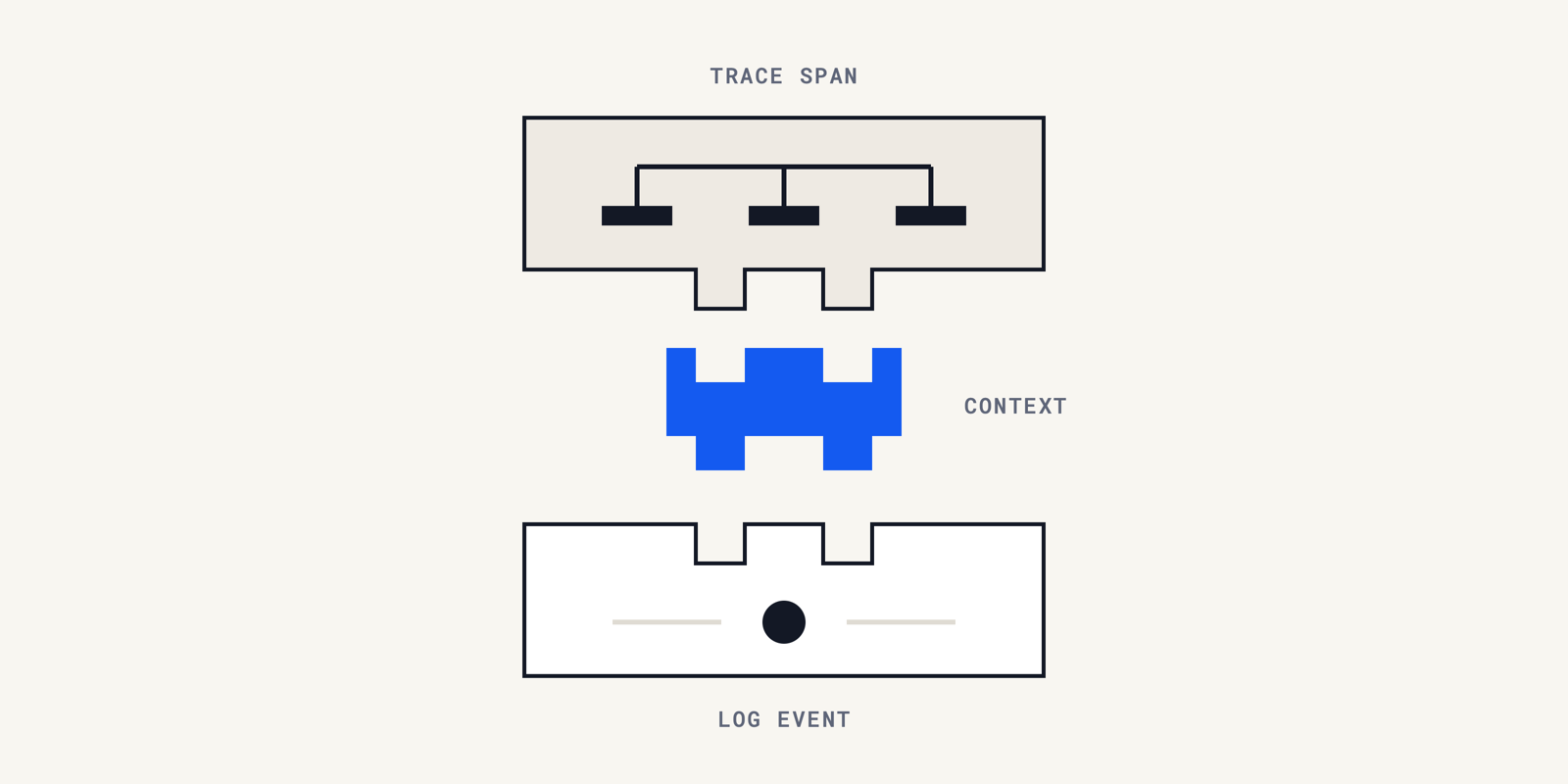
The Operations solution describes investigations using connected records, logs and supplied rules. We would verify that the required sources are available before expecting an answer about a particular workflow.
Our handoff would state the observed condition, supporting records, unresolved uncertainty and next authorized decision. It should identify who needs to act without silently granting that person new permissions.
For failed messages, the dead letter queue operating guide covers ownership and redrive rules. We would apply the relevant rule before treating a queued message as permission to repeat work.
We would review a representative completed case with operations and engineering. Both teams should be able to explain the current state and identify what additional evidence would change their next decision.
Compare Operating Burden on the Same Workflow
We would evaluate workflow orchestration against the actual work it would coordinate. The comparison should include maintaining decisions and handling exceptions, not only starting tasks successfully.
1. Match the Execution Model to the Work
Apache Airflow describes workflows as directed acyclic graphs, with tasks and dependencies. Its overview positions it for batch-oriented workflows with clear starts and ends.
We would check that fit against the proposed workflow's waiting and execution model. A tool's popularity does not establish that it suits every long-lived business process.
Our evaluation would ask the implementation owner to demonstrate the relevant dependency and wait behavior. We would keep the acceptance criteria focused on the decisions in the worksheet.
We would also identify the workflow automation that can remain in its existing service. A smaller coordination boundary can be easier to explain and maintain, if it still covers the required decisions.
2. Measure the Work of Owning the Coordinator
We would record actual engineering effort, operator review time, infrastructure usage and retained-history needs during the evaluation. We would avoid projecting savings from an unrelated workload.
Our trial would include normal completion, a missing external response, a delayed approval and a stopped migration. These are proposed review cases, not claims about incidents we have handled.
For each case, we would record the decision owner, evidence available, manual intervention and unresolved work. The result should show which responsibilities the new design makes easier or harder.
We would ask who maintains the coordinator's access, workflow definitions and recovery procedures after adoption. Task automation still needs owners; a shared coordinator adds shared operational responsibilities.
We would reject a design that the team cannot explain or support, even if its normal-path demonstration looks polished. A smaller boundary or a later migration may be the better next step.
Choose the Boundary Your Team Can Explain
We would choose one real workflow, complete its decision ownership worksheet and test the proposed transfer before expanding workflow orchestration. Unanswered ownership questions are work to resolve before rollout.
We would then make workflow monitoring expose the same decisions and records. Operations and engineering should be able to agree on who acts next without inventing missing state.
For the investigation around a stuck workflow, we would use Operate to connect available evidence and propose next steps for review. Business authority remains with the responsible team.
Frequently Asked Questions
Yes. We would use Jira automation for rules built from triggers, conditions and actions. We would inspect the rule's scope and audit log before relying on it. That product capability does not make every Jira rule a complete workflow orchestration design for other business systems.
We would check which SAP product the team uses. SAP Business Workflow can define approval or release steps within SAP. We would read the relevant component's setup before judging a work item, since the product name alone leaves its purpose unclear.
Kubernetes manages containers. Its overview describes control loops that drive current state toward desired state. We would check that scope before choosing it for a business process; running the app does not define all the approvals that the app needs.
We would view them as flows built from blocks for triggers, conditions and actions. The monday.com guide shows how to use run history to inspect each step. We would check that history to see where a specific run stopped or failed.
We treat AI as a capability that can participate in automation. A fixed rule can automate work without AI, while AI can assist a person without executing the work. Jira's documentation illustrates agents used within flows. We would specify the agent's responsibility before adopting that arrangement.
About the author

Operate Team
The team behind Operate
Operate Team builds Operate, enterprise AI agents for production operations. Operate answers production questions from Slack and Microsoft Teams, investigates alerts, and reviews performance, security and cost. It finds the root cause with evidence and proposes a fix for an engineer to review, with controlled access to your systems.
Related Operate capabilities
- Slack and Teams investigations
Ask why a workflow behaved unexpectedly and get evidence and a next step for the responsible team to review.