How Much Does an AI SRE Cost When One Incident Triggers Several Investigations?
Compare AI SRE pricing per incident, including repeat runs, credit bundles, query fees and human review. Use a ledger to test your own pilot costs.
Quick Answer
AI SRE pricing only makes sense when the buyer groups alerts, agent runs and vendor billing units back to the same production incident. A low per-run price can cost more than a bundled issue model if retries, follow-up passes, query fees and reviewer time multiply. Compare cash expense, credit consumption and human review separately, then divide by eligible incidents, accepted diagnoses and accepted coverage.
AI SRE pricing is the way a vendor charges for software that helps investigate production failures with AI. The hard part is that the thing you care about is usually one incident, while the invoice may count active seconds, issue credits, tokens, runs or some mix of those units.
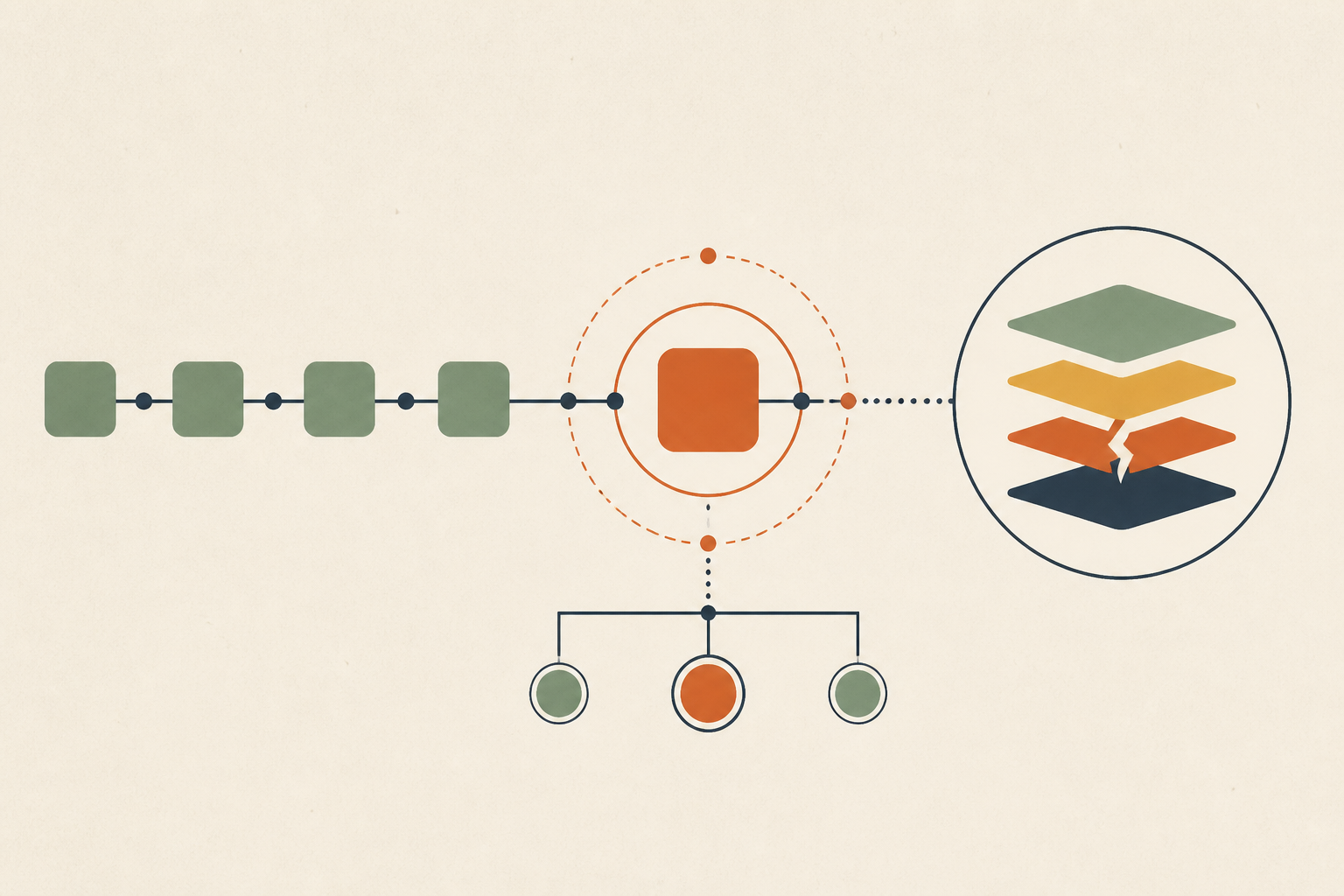
I do not like comparing AI SRE cost per incident from a rate card alone. One customer-visible outage can trigger repeated alerts, reopened investigations, background tasks and human review. If I only price the first run, I understate the bill. If I count every alert as a new incident, I overstate the denominator.
This guide gives me a practical worksheet for commercial evaluation. I cover the incident ledger, contract reading, cash versus credit accounting, reviewer labor, accepted-diagnosis denominators, a synthetic sensitivity example and a bounded pilot plan.
AI SRE Pricing Starts With Incidents, Not Alerts
AI SRE pricing starts with the production problem, not the notification stream. I treat an incident as the customer’s production failure, then map alerts, agent runs and vendor billable units back to that incident.
A single checkout slowdown might page on latency, database saturation and queue lag. That is still one incident if the failure and time window match. It may become three billable objects if the contract charges by alert, issue or run.
I separate these objects before I read any quote:
| Object | What I Mean | Pricing Risk |
|---|---|---|
| Incident | The production problem I am budgeting | The buyer defines it for comparison |
| Alert | A notification or symptom | Several alerts can point to one incident |
| Agent Run | One investigation attempt | Retries can multiply cost |
| Vendor Billable Unit | The contract unit on the invoice | It may be seconds, credits, tokens or issues |
That distinction prevents a common mistake. A cheap run can become an expensive incident when the tool needs many attempts. A bundled issue can look expensive per issue, then include repeat work that another quote bills separately.
I also avoid assuming every alert is a separately billed case. Similar alerts are not automatically the same incident, but they are not automatically separate incidents either. I need a rule before I compare vendors.
Pro tip: I name the production problem first, then attach billing evidence to it. If the vendor’s object comes first, the worksheet starts matching the invoice instead of the outage.
Build an AI SRE Pricing Episode Ledger Before Comparing Quotes
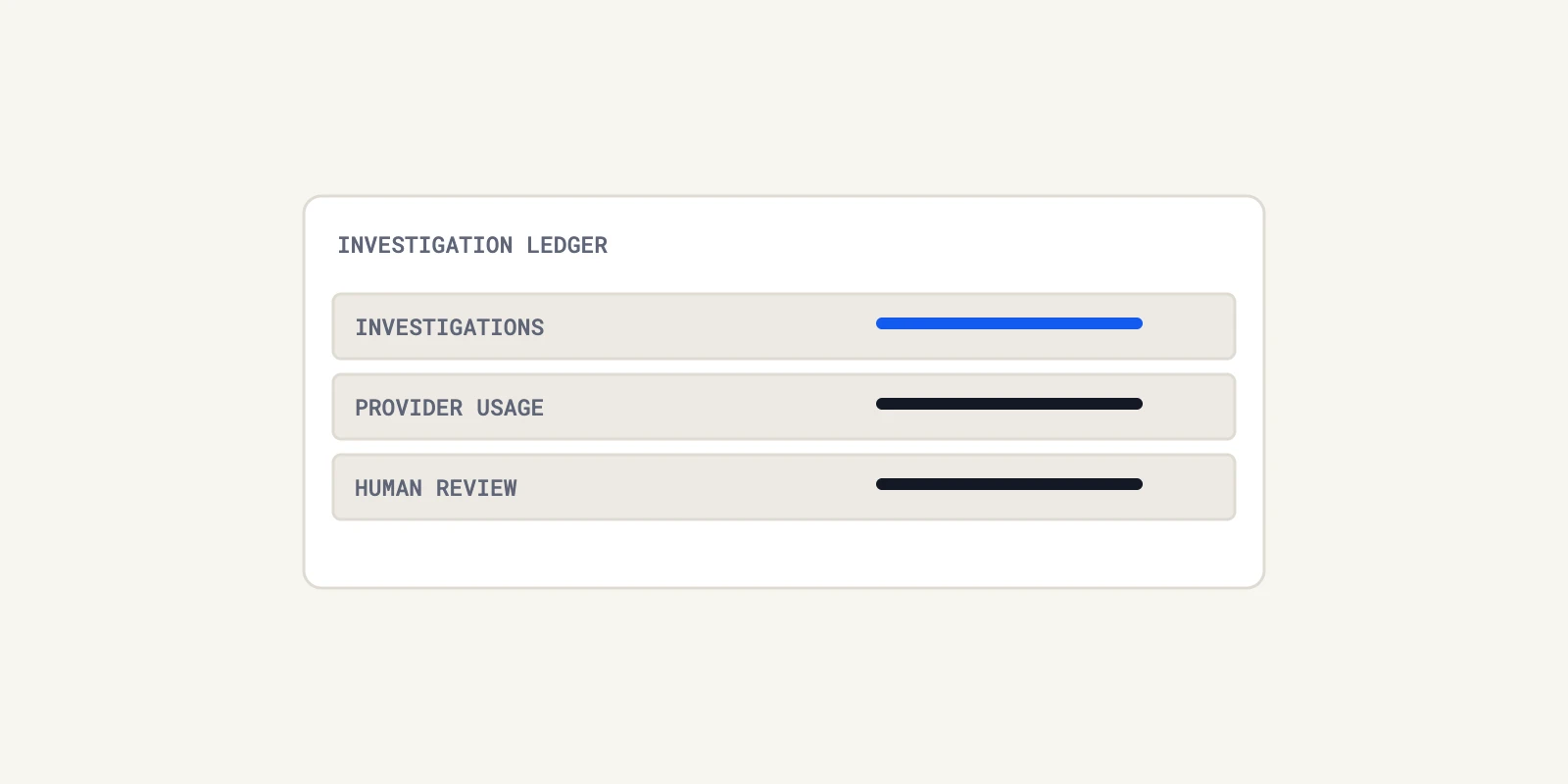
An AI SRE pricing comparison needs an episode ledger before it needs a spreadsheet total. I assign one stable incident_id to a common failure and time window, then attach every related alert ID, vendor issue ID, run ID, reopened attempt and date.
I make the grouping rule human-owned. An engineer decides that two alerts share the same failure, or records that the grouping is ambiguous. Then I apply the same rule to every option under review.
A blank ledger can be simple:
| Field | What I Record | Example Value |
|---|---|---|
| incident_id | Buyer-owned incident key | INC-2026-10-04-01 |
| incident_window | Start and end window used for grouping | Same production failure and time window |
| alert_ids | Alert identifiers attached to the incident | Latency page, database page |
| vendor_issue_ids | Vendor issue or case identifiers | Issue record from the tool |
| run_ids | Every investigation attempt | Run 1, Run 2, reopened run |
| status | Accepted, rejected, inconclusive, unsupported or budget-stopped | Accepted |
| accepted_diagnosis | One human-accepted diagnosis per incident at most | Evidence-backed lock queue diagnosis |
| reviewer_minutes | Human review, correction and fallback time | 5 minutes per run in the synthetic case |
| cash_charges | Invoice charges tied to the period | Base, outside credits, query fees |
| consumption_units | Credits, tokens, seconds or runs consumed | 10 credits or active seconds |
I do not hide ambiguous rows. If two alerts might be one incident, I record the uncertainty and apply the same decision to both vendors. That keeps the comparison from quietly favoring the option with a cleaner dashboard.
The ledger also gives me a place to record unresolved work. Unsupported, rejected and inconclusive investigations stay in the cohort. They consumed money or time, so they cannot disappear from the numerator.
Read AI SRE Pricing Contracts by Billable Object
AI SRE pricing contracts differ because they count different things. I read the unit, the retry rule, the inclusion boundary and the external-charge rule before I compare any displayed price.
Public pages give useful examples, but I treat documented terms as billing terms, not proof of performance. The AWS DevOps Agent pricing page says the official rate is $0.0083 per active agent-second, idle time is not charged, and connected-service queries and trace retrievals are additional.
The Cleric pricing page says monthly credits cost $1, an Issue investigation consumes 10 credits, and related or repeat alerts and follow-up passes remain in the Issue. It also says retries, duplicates, inconclusive results and corrections are not charged separately under the stated terms. The Cleric pricing page also lists Starter with 100 credits for $100 monthly.
The Azure SRE Agent pricing and billing page says the always-on flow is 4 AAUs per agent-hour while provisioned. It also says active flow is metered by model and token type, and stopping or reaching an active-flow cap does not end always-on billing.
| Pricing Pattern | Public Example | What I Confirm Before Buying |
|---|---|---|
| Active-time billing | AWS DevOps Agent at $0.0083 per active agent-second | Duration measurement, idle definition, query charges and trace retrieval charges |
| Bundled issue credits | Cleric credits, with 10 credits per Issue investigation | Issue grouping, repeat alerts, retries, duplicates, inconclusive work and corrections |
| Provisioned plus token usage | Azure SRE Agent with 4 AAUs per agent-hour while provisioned | Regional dollar quote, active-flow caps, token rates and always-on billing behavior |
| Self-hosted AI SRE terms | Software that runs in the buyer’s infrastructure | Hosting, AI provider charges, retry charging, grouping and exports |
I also distinguish investigation software from a managed response service. A managed SRE retainer covers a different responsibility set. I would not substitute managed-service fees for software fees unless the responsibility boundary matched.
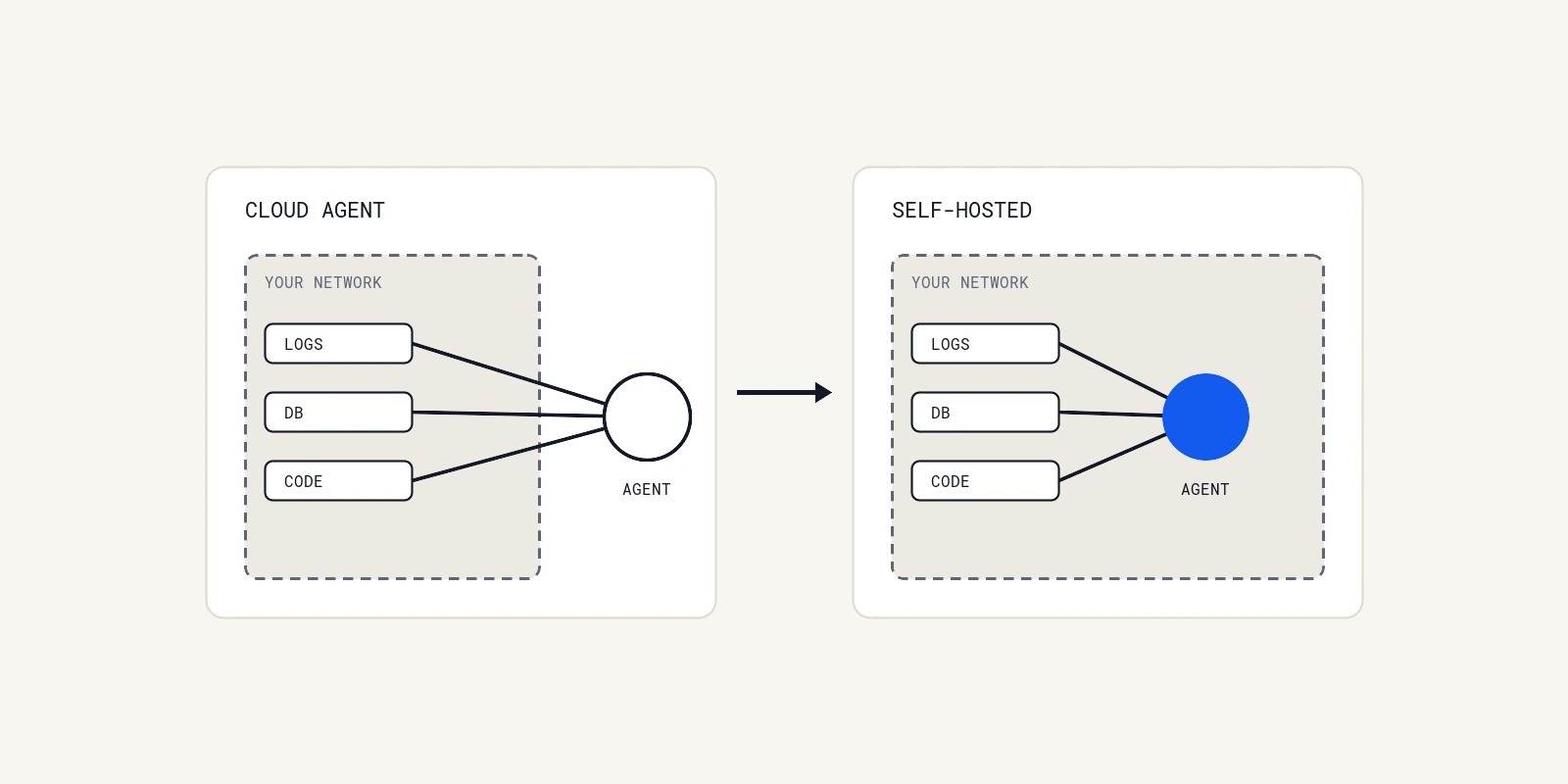
For a self-hosted product, I also read the deployment requirements. If the buyer hosts the software, I include infrastructure, outbound provider connectivity and evidence access in the cost model, using the vendor’s deployment infrastructure requirements as a checklist.
Keep Cash and Credit Views Separate in AI SRE Pricing
AI SRE pricing becomes misleading when I mix cash paid with credits consumed. I keep period cash expense separate from consumption value, then show both views side by side.
Cash expense is the money due for the period. It includes applicable base or commitment charges, charges outside included credits, separately invoiced provider costs, query costs and hosting costs. If an annual term exists, I use the same amortization period for every option.
Consumption value is the metered work at the contracted conversion rate. It tells me how quickly I used included credits, tokens, seconds or runs. It does not add another invoice line by itself.
| View | Formula | What I Avoid |
|---|---|---|
| Cash Expense | Base or commitment charges plus outside-credit charges plus separate providers, queries and hosting | Adding included credit value again |
| Consumption Value | Metered work multiplied by the contracted conversion rate | Treating expired or remaining credits as cash already spent on incidents |
| Setup Cost | One-time implementation or onboarding charge | Blending setup into steady-state incident cost without labeling it |
The simplest test uses a hypothetical $100 bundle with $50 consumed. Cash expense before other costs is $100, not $150. The $50 tells me utilization, not an extra payment.
I separate prepaid balances too. Credits bought, credits consumed, credits remaining and credits expired tell different stories. A pilot that burns all credits quickly may need a different commitment, even if the first invoice looked controlled.
Pro tip: I never let a credit dashboard become the budget. The budget starts with invoices, commitments and external bills, then uses credits to explain consumption.
Add Human Review Work to AI SRE Pricing
AI SRE pricing must include human review because accepted diagnoses still need engineering judgment. I track review, correction, manual fallback and maintenance minutes across successful and unsuccessful incidents.
I value that time with a buyer-supplied loaded hourly rate. I show it as economic cost, not cash saved. Time valued in dollars is useful for comparison, but it is not the same as a lower invoice.
The synthetic case later uses 5 review minutes per run at $60/hour. I keep those values visible because a tool that runs 50 times creates more reviewer load than a tool that runs 10 times, even when both reach the same number of accepted diagnoses.
Human work includes more than reading the final answer. I count correction time when the diagnosis needs edits, manual fallback time when the tool stops, and allocated maintenance time for prompts, access configuration or evidence connectors.
I also keep review standards fixed. An accepted diagnosis needs human acceptance and evidence support. It is not proof of mitigation, recovery or a durable fix.
Calculate Three AI SRE Pricing Denominators for One Cohort
AI SRE pricing needs three denominators because one ratio can hide failed coverage. I calculate cost per eligible incident, cost per accepted diagnosis and coverage for the same predeclared incident cohort.
I freeze the cohort before I start. Unsupported, rejected, inconclusive and budget-stopped cases stay in the cohort. Their costs stay in the numerator because the buyer still paid cash, credits or reviewer time.
1. Cost Per Eligible Incident
I calculate cash cost per eligible incident by dividing period cash expense by the number of eligible incidents in the cohort. I calculate economic cost per eligible incident by adding reviewer labor and other buyer-valued effort.
If the cohort has 10 eligible incidents, all 10 stay in the denominator. I do not remove the 2 that failed just because they make the unit cost look worse.
2. Cost Per Human-Accepted Diagnosis
I calculate cost per human-accepted, evidence-backed diagnosis by dividing cost by accepted diagnoses. I count at most one accepted diagnosis per incident.
If a later reversal shows the diagnosis was wrong, I change the status. The ledger should make that update visible rather than leaving a stale success count in the worksheet.
3. Accepted Coverage
Coverage is accepted diagnoses divided by all eligible incidents. It answers a different question than cost. A tool can have a low invoice and poor coverage, or a higher invoice with more accepted work.
If zero incidents qualify as accepted diagnoses, I report no accepted diagnoses and an undefined ratio. I never report $0 because no accepted work does not mean free accepted work.
Work a Synthetic AI SRE Pricing Example Before Buying
A synthetic AI SRE pricing example shows why the incident denominator matters. I hold outcomes constant, then change run count to show how repeat investigations alter the bill.
This is sensitivity arithmetic, not vendor performance. I am not claiming observed retry behavior, accuracy, savings or production recovery. I am showing how the same accepted outcome can carry different costs when runs multiply.
• Run-Based Sensitivity
Assume 10 eligible incidents and 8 accepted diagnoses. One option uses 10 runs. Another uses 50 runs. Both outcomes stay constant.
Assume hypothetical $2/run, $0.50 query cost/run and 5 review minutes/run at $60/hour. There is no fixed charge in this synthetic case.
| Input | Option A | Option B |
|---|---|---|
| Eligible incidents | 10 | 10 |
| Accepted diagnoses | 8 | 8 |
| Runs | 10 | 50 |
| Run charge | $2/run | $2/run |
| Query cost | $0.50 query cost/run | $0.50 query cost/run |
| Review time | 5 review minutes/run at $60/hour | 5 review minutes/run at $60/hour |
| Fixed charge | No fixed charge | No fixed charge |
Cash is runs multiplied by run charge and query cost. Option A is 10 runs times $2/run plus 10 runs times $0.50 query cost/run, which totals $25. Option B is 50 runs times the same charges, which totals $125.
Reviewer labor adds 5 minutes per run at $60/hour. Option A adds $50 of economic cost. Option B adds $250 of economic cost.
| Output | Option A | Option B |
|---|---|---|
| Total cash | $25 | $125 |
| Economic cost | $75 | $375 |
| Economic cost per accepted incident | $9.375 | $46.875 |
This is the mistake I see in per-run comparisons. The displayed unit price can look harmless, but the incident cost depends on the number of runs needed for the same accepted diagnosis.
• Bundled-Credit Sensitivity
A bundled-credit example prevents the opposite error. Assume a hypothetical $100 bundle and $50 consumed during the cohort. I record $100 as cash expense before other costs, not $150.
I still record $50 as consumption value. That tells me how much of the bundle the incident cohort used. It does not create another cash line unless the contract charges overage, renewal, expiration or outside-provider work.
• Published Worksheet Fields
When I share the pilot results with a CFO or CTO, I publish the blank ledger and formulas, not just the totals. That lets someone audit incident grouping, accepted status and human review assumptions.
The formulas are plain enough to copy:
| Metric | Formula |
|---|---|
| Cash expense | Base or commitment plus outside-credit charges plus separate provider, query and hosting costs |
| Economic cost | Cash expense plus reviewer labor, correction time, fallback time and maintenance time |
| Cash cost per eligible incident | Cash expense divided by eligible incidents |
| Economic cost per accepted diagnosis | Economic cost divided by accepted diagnoses |
| Coverage | Accepted diagnoses divided by eligible incidents |
Pro tip: I keep the synthetic case separate from the pilot result. A sensitivity case teaches the buying team how cost behaves, but it does not prove a vendor will run fewer investigations.
Run a Bounded AI SRE Pricing Pilot With Spending Limits
An AI SRE pricing pilot should be bounded before the first incident enters the cohort. I freeze the incident cohort rule, evidence availability, reviewer rules and spending limit before anyone starts testing.
The cohort definition matters more than the sample size rhetoric. If I only have a small sample, I show each observation and the maximum. I do not report a confident p99 from a small pilot.
I also keep a manual fallback owner. If the tool cannot access the needed logs, database evidence, code context or observability data, someone still owns diagnosis. The unserved case remains in the ledger.
I split setup and steady-state cost. Setup can include infrastructure, access configuration, evidence connections and review process changes. Steady-state cost includes runs, credits, tokens, query fees, hosting and reviewer time.
The pilot should stop at its agreed ceiling. I do not run more work merely to improve a ratio. Budget-stopped cases stay visible because they show what the spending limit could not cover.
For AI SRE pilot cost, I want a final table with each incident row, elapsed time, labor, accepted status and cost. Averages can sit below that table, but they should not replace the rows.
Use AI SRE Pricing to Buy Accepted Diagnoses, Not Runs
AI SRE pricing should support a purchasing decision based on equivalent scope and accepted coverage. I compare the same incident cohort, the same reviewer rule and the same cost views before I call any option cheaper.
I ask unresolved billing questions in writing. I want the retry rule, inconclusive-result rule, correction rule, background-task rule, credit expiration rule, cap behavior, geography, tax, prerequisite plans and human escalation terms documented.
I also avoid crossing category lines. A managed SRE retainer covers a different responsibility set than investigation software. I would evaluate that against who owns production work, not against a software fee alone.
My buying rule is simple. I would rather pay for human-accepted, evidence-backed diagnoses than celebrate a low price per run that leaves unresolved incidents in the residual pile.
Use the ledger with any AI investigation pricing model, including active seconds, issue credits, provisioned usage, token usage and self-hosted deployment costs. I would use the same ledger for Operate and every alternative, then make the decision from accepted coverage and total cost.
Frequently Asked Questions
I would not quote one universal AI SRE pricing number because contracts count different units. Per-incident cost depends on base commitments, included credits, outside-provider bills, query fees, hosting and reviewer labor. I start with a fixed cohort, then divide total cost by eligible incidents and accepted diagnoses.
I use AI investigation pricing to mean the commercial model for AI-assisted production diagnosis. It can charge by active seconds, issue credits, token usage, runs or provisioned capacity. I care less about the label than the rule for retries, inconclusive work and repeated alerts.
I include setup, steady-state usage, external provider charges, observability queries, hosting, reviewer minutes, correction time and manual fallback. For AI SRE pricing, I keep setup separate so one-time work does not distort the recurring incident cost I need for budgeting.
I treat credits as a consumption meter until the contract says otherwise. In AI SRE pricing, bought credits, consumed credits, expired credits and remaining credits need separate columns. I do not add consumed included credits to cash expense again unless the vendor invoices an overage.
I only call per-run AI SRE pricing cheaper after I count repeats. A low run price can beat issue pricing when incidents resolve in one attempt. It can lose when the same incident triggers many runs, extra queries and more review time before a diagnosis is accepted.
About the author

Operate Team
The team behind Operate
Operate Team builds Operate, enterprise AI agents for production operations. Operate answers production questions from Slack and Microsoft Teams, investigates alerts, and reviews performance, security and cost. It finds the root cause with evidence and proposes a fix for an engineer to review, with controlled access to your systems.