Meta Runs 50,000 Automated Investigations a Day. The Number That Matters Is 2,000.
Meta's DrP runs 50,000 automated investigations a day across 300 teams. The overlooked number is 2,000 hand-authored analyzers, and what it says about the real cost.
Meta Runs 50,000 Automated Investigations a Day. The Number That Matters Is 2,000.
TL;DR: Meta's DrP platform automates investigation to reduce MTTR by up to 80%, but the headline numbers mask the true cost of implementation. The real finding is the 2,000 hand-authored analyzers that require constant engineering maintenance—a scale and cost structure that small teams must navigate differently by focusing on chaining and reviewed artifacts.
The Meta engineering post "DrP: Meta’s Root Cause Analysis Platform at Scale" has become the latest citation for leaders looking to solve on-call toil. The figures are undeniably impressive: over 300 teams have adopted the platform, it executes 50,000 analyses per day, and it has successfully reduced Mean Time to Recovery (MTTR) by between 20 and 80 percent across different services.
However, engineering leaders at mid-sized companies risk taking the wrong lesson from this five-year effort. While the 50,000 daily runs indicate high utilization, the number that actually defines the project’s cost and complexity is 2,000.
The number everyone quoted, and the one they skipped
The industry has largely focused on the 50,000 daily executions as evidence that automated root cause analysis has arrived. But according to the primary source from Meta Engineering, the platform’s intelligence is distributed across 2,000 "analyzers."
These analyzers are not magic black boxes; they are the result of half a decade of intentional knowledge codification. Since the platform has been in production for over five years across 300 teams, the math suggests a steady, high-effort accumulation of one analyzer per team per year. For a 40-engineer company, the MTTR reduction isn't something you "turn on"—it is an asset you build.
What an analyzer actually is
To understand why 2,000 is such a significant number, you have to look at what an analyzer actually does. It is a hand-authored investigation playbook. An engineer must:
- Enumerate the specific investigation steps for a service.
- Codify the decision tree (e.g., "if error rate > 5%, check the upstream dependency").
- Pull the necessary telemetry data via an SDK.
- Isolate the problem and emit a machine-readable finding.
Crucially, these are not LLM prompts. They are code artifacts. They are reviewed like code, version-controlled, and backtested against historical incidents before deployment. This ensures the rca automation provides actionable data rather than hallucinations or noise.
Why 2,000 is the number
The ratio of 2,000 analyzers to 300 teams is the honest price tag of automated root cause analysis. It represents the conversion of "senior engineer intuition" into a reusable organizational asset.
Key Takeaway: Automated investigation is not a model you buy; it is a decision tree that must be authored, backtested, and maintained like production code.
If you are budgeting an internal RCA effort, do not start with the 80% MTTR reduction figure. Start with the realization that your senior engineers will need to spend significant time codifying their knowledge into an incident investigation platform. At Meta's scale, this resulted in 2,000 distinct units of logic. For a smaller org, the cost of "analyzer decay"—where an analyzer breaks because the service it monitors changed shape—is often the hidden killer of these projects.
The three choices that transfer
While you likely don't have a dedicated SDK team for an analyzer playbooks platform, three structural choices from DrP are universally applicable:
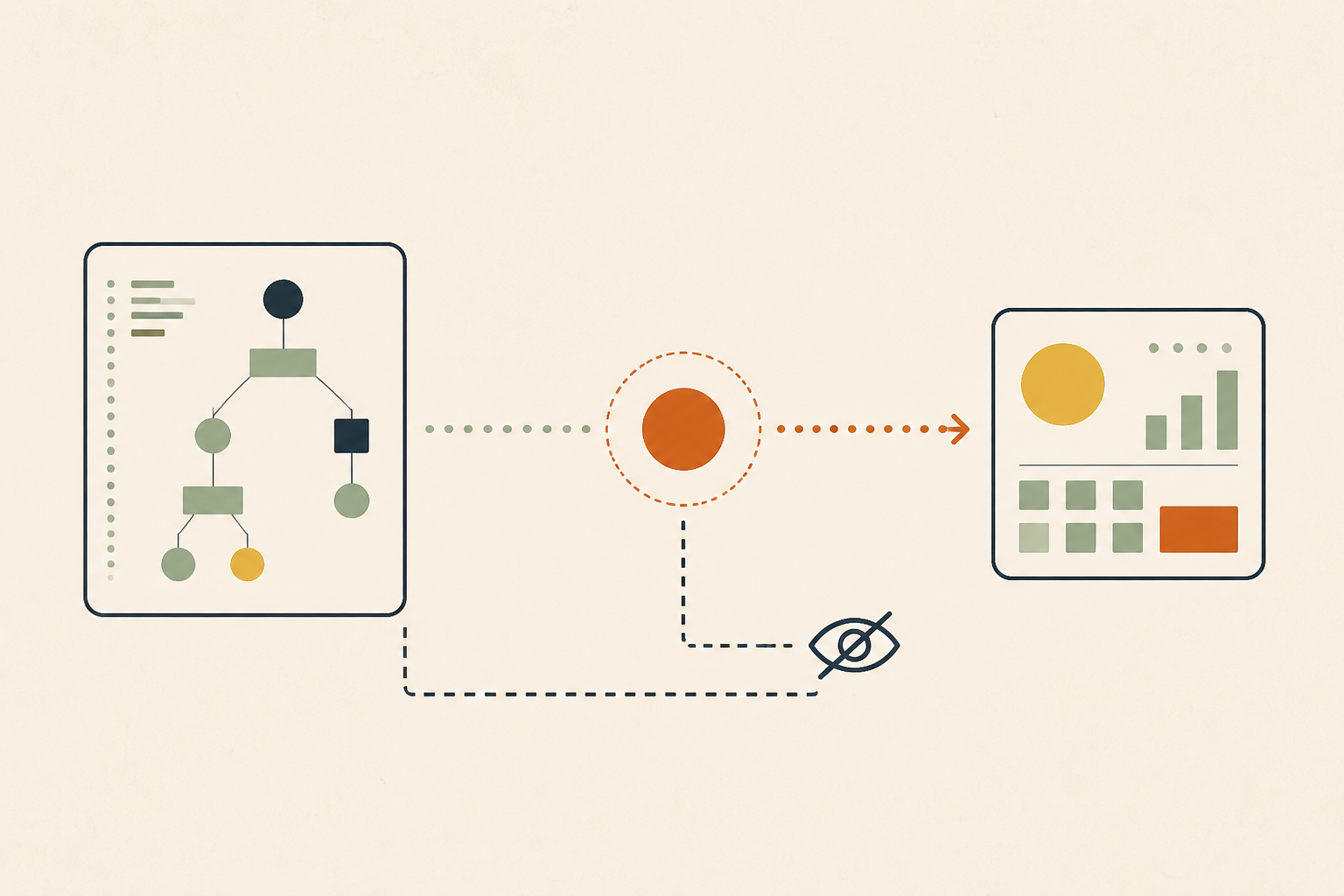
- Chaining across service boundaries: This is the most important architectural insight. An analyzer for Service A can invoke the analyzer for Service B. If Service B’s analyzer confirms a fault, it passes that context back. This allows a team to benefit from investigation knowledge they didn't have to write themselves.
- Output lands on the alert: Meta avoids the "yet another dashboard" problem by annotating the alert itself. The finding arrives where the on-call engineer already is.
- Backtesting in code review: By testing an investigation path against past data before it goes live, Meta ensures the output is trusted. If the automation isn't trusted, the engineer will just ignore it and start a manual investigation anyway.
What does not transfer
It is important to be realistic: most companies with 30 to 300 engineers cannot replicate the DrP environment. You likely lack a five-year runway, a dedicated platform team to build the underlying SDK, and the per-team authoring capacity to maintain hundreds of custom analyzers. Pretending this case study is a "how-to" template for a small team is a recipe for on-call toil.
Read the range honestly (Inference)
Meta reports an MTTR reduction of 20 to 80 percent. This is a massive four-fold spread. While the post doesn't explicitly break down why some teams saw 20% and others 80%, we can infer a few likely factors:
- Coverage: Teams with analyzers for every major alert naturally see higher gains.
- Predictability: Services with well-understood failure modes benefit more from codified logic than experimental, rapidly changing services.
- Maintenance: The 80% gain likely belongs to teams that updated their analyzers every time the service architecture evolved.
The AI-native line is the interesting part
Meta’s stated next step is to make DrP "AI-native." This should be read as a constraint statement: even with 300 teams, hand-authoring 2,000 analyzers does not scale indefinitely. The move toward AI-native investigation is an admission that the labor cost of manual codification is too high. The challenge, which the industry has yet to solve, is how to maintain the "backtesting discipline" when the investigation path is generated by a model rather than written by a human.
What a 40-engineer team should take from this
If you want the benefits of DrP without the Meta-sized budget, follow this progression:
- Identify the three alerts that page your team most often.
- Write down the manual investigation path as a specific procedure with explicit data checks.
- Automate just those checks and attach the output directly to the alert.
- Review the "automated finding" every time it's wrong, just as you would a bug in code.
Meta’s success with automated root cause analysis proves that investigation is a data problem, not just a "vibes" problem. By treating investigations as reviewed artifacts, they’ve built a system that compounds knowledge over time.
This structural agreement is at the heart of how we built Operate. Meta’s platform earns trust by backtesting investigations and post-processing findings into tasks or pull requests rather than acting on production blindly. Operate follows the same philosophy for teams without a massive platform org: it provides a self-hosted, read-only environment that drafts fixes as PRs, using a verification pass to ensure the diagnosis is evidenced before a human ever sees it.