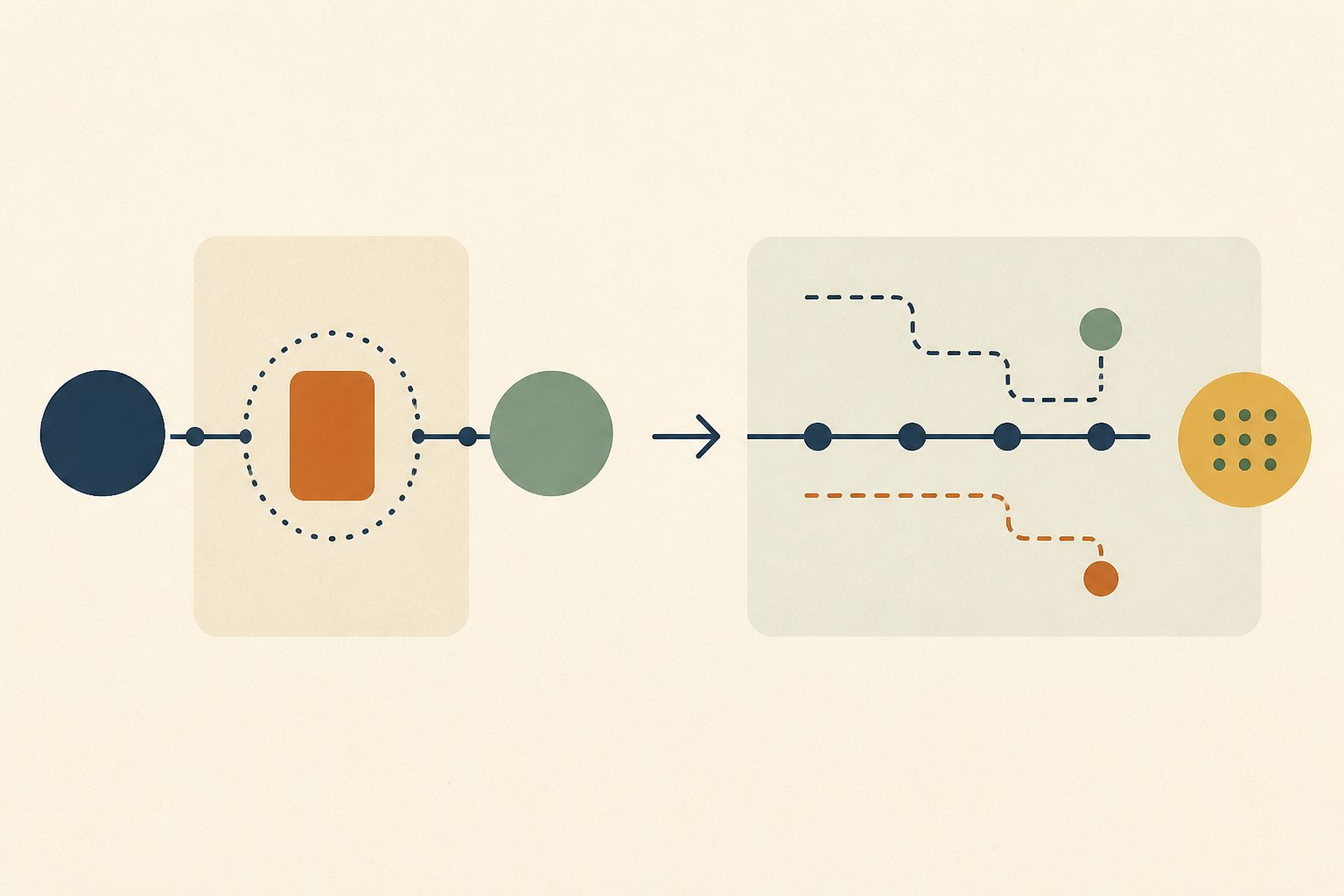
Nine Hospitals Cut Medical Errors 23 Percent by Changing How Shifts Hand Over
TL;DR: A structured on-call handoff based on the clinical I-PASS framework can significantly reduce production errors and context loss. By prioritizing severity, defining explicit "if-then" contingencies, and requiring a synthesis by the receiver, engineering teams can ensure the incoming engineer inherits a complete mental model of the system's state.
In the high-stakes world of software reliability, the on-call handoff is often the weakest link in the chain. For many engineering teams, the transition between the outgoing and incoming engineer is an informal ritual—a quick Slack message, a five-minute Zoom call, or a forwarded email that says little more than "quiet night, good luck."
However, in fields where the cost of failure is measured in lives rather than latency, the handoff is treated with the rigor of a surgical procedure. By examining how hospitals and air traffic controllers manage the transfer of responsibility, we can identify a blueprint for software operations that eliminates the "context cliff" teams face during shift changes.
The I-PASS Study: Evidence for Structure
The most compelling evidence for structured handoffs comes from the medical field. Between 2011 and 2013, a group of researchers implemented a standardized handoff program across nine pediatric residency programs in the United States and Canada. The results, published in the New England Journal of Medicine, were staggering.
According to Starmer et al. (2014), the implementation of the I-PASS mnemonic and training program led to a 23 percent decrease in medical errors (from 24.5 to 18.8 per 100 admissions) and a 30 percent drop in preventable adverse events. Crucially, this improvement in safety did not come at the cost of efficiency; the duration of oral handoffs remained virtually unchanged, moving from 2.4 to 2.5 minutes per patient.
The Joint Commission, which accredits healthcare organizations, reinforced these findings in Sentinel Event Alert 58. They noted that inadequate hand-off communication is a primary contributor to adverse events, highlighting that the transfer of information is not just about data, but about the shared understanding of that data.
Key Takeaway: Adopting a structured five-part handoff that prioritizes severity and receiver synthesis can reduce operational errors by nearly a quarter without increasing the time spent on the transition.
What I-PASS Actually Structures
The I-PASS framework is not just a form to fill out; it is a mental model for the transfer of command. It consists of five distinct elements:
- I: Illness Severity. A one-word assessment (Stable, Watcher, or Unstable).
- P: Patient Summary. A brief summary of the patient's diagnoses and treatment plan.
- A: Action List. To-do items for the incoming clinician.
- S: Situation Awareness and Contingency Planning. "If-then" statements for what might go wrong.
- S: Synthesis by Receiver. The incoming clinician summarizes what they heard to confirm understanding.
In an on-call handover, we frequently see teams skip the final "S." The outgoing engineer talks, and the incoming engineer nods. Without the synthesis step, the outgoing engineer has no way of knowing if the critical nuance—the why behind a specific watch item—was actually received.
Lessons from the FAA: Position-Relief Procedures
Aviation provides a secondary, equally rigorous model. The Federal Aviation Administration (FAA) maintains strict rules for "position relief" in air traffic control. According to FAA JO 7110.65, the transfer of responsibility is a formal process, not a casual swap.
The FAA requires a mandatory checklist to ensure no item is missed. Furthermore, both controllers share equal responsibility for the safety of the sector during the transition. The process includes an "observation period" where the outgoing controller stays to watch the incoming controller handle the live traffic, ensuring the mental model has been successfully transferred.
Google’s SRE Workbook mirrors this clinical and aviation rigor, advocating for a "Clear, Live Handoff" during incident command transitions. This requires an explicit statement of transfer ("I am now handing over Incident Command to you") and a firm acknowledgment ("I accept Incident Command").
The Engineering On-Call Handoff Template
To translate these high-stakes lessons into software engineering, we can adapt the I-PASS elements into a structured on-call handoff template. This structure ensures that an on-call handover captures not just the "what," but the "what next."
1. Severity First (The "S")
Before diving into logs, the outgoing engineer must categorize the current state of the system:
- Green: No active incidents, no concerning trends.
- Yellow (Smoldering): Active "watchers." Performance is within SLOs, but a specific metric is trending poorly or a known bug is manifesting.
- Red (Burning): Active SEV-1/SEV-2 incidents.
2. Summary per Open Item
For every item that isn't "Green," provide a concise summary:
- System: Which service or infrastructure component is affected?
- Symptom: What is the user-facing impact?
- Ruled Out: What hypotheses have already been tested and rejected? (This prevents the incoming engineer from wasting the first hour repeating the same queries).
3. Actions Owed
List specific tasks that need to be completed during the shift.
- Example: "Check the cleanup job at 02:00 UTC to ensure the disk space reclaimed."
- Example: "Update the status page at 09:00 UTC regardless of progress."
4. Watch Items with Contingencies
This is the most critical and most frequently missed part of the on-call handoff. You must provide explicit "if-then" instructions.
- Weak: "Keep an eye on the database lag."
- Strong: "If replica lag exceeds 30 seconds for more than 5 minutes, fail over reads to the secondary region. Do NOT restart the primary; we need the heap dump."
5. Synthesis and Transfer
The incoming engineer restates the plan: "Okay, I'm watching the replica lag, and if it hits 30s, I fail over rather than restarting. I'll check the 02:00 UTC job. I have the con."
Why This Matters Now
Engineering teams are currently facing a "context crisis." As systems become more distributed and ephemeral, the amount of state an engineer must hold in their head increases. When an on-call handoff is unstructured, that state evaporates.
The "context loss" described in recent industry discussions is often just a failure of handover. If the incoming engineer spends three hours rediscovering that a specific network path isn't the cause of the latency, that is three hours of wasted MTTR (Mean Time To Recovery). We use these structures not to be bureaucratic, but to preserve the hard-won search progress of the outgoing engineer.
Common Pitfalls
- The "Wall of Text" Email: If the on-call handover template is too long, it won't be read. Keep the summary and actions to bullet points.
- Lack of Training: The I-PASS study succeeded because it included training and observation. You cannot simply drop a template into a Notion doc and expect a 23% error reduction. You must practice the "Synthesis" step.
- Treating Handoff as "End of Work": The outgoing engineer's shift isn't over when the clock strikes 5:00. It is over when the incoming engineer has successfully synthesized the state.
Measuring Success
To determine if your on-call handoff process is working, track these two metrics:
- Repeat Pages: How many alerts fired for an issue that was supposedly covered or "known" during the handoff?
- Time to First Action: For incidents inherited during a shift change, how long does it take for the incoming engineer to take a new corrective action, versus just re-reading logs?
Conclusion
Effective operations require more than just better monitoring; they require better communication. By adopting the rigor of the I-PASS framework, engineering teams can ensure that the transition between engineers is a bridge, not a cliff.
The part of a handoff that decays fastest is "what has already been ruled out," which is why Operate keeps an auditable case per investigation—capturing every piece of evidence and every hypothesis rejected by the AI Verification agent—so the incoming engineer inherits the entire search history, not just a summary.
Sources & Further Reading
- According to Starmer et al. (2014) in the New England Journal of Medicine, structured handoffs reduced medical errors by 23%.
- The Joint Commission Sentinel Event Alert 58 highlights that communication failures during handoffs are a leading cause of patient harm.
- The FAA JO 7110.65 provides the gold standard for position-relief checklists in high-concurrency environments.
- The Google SRE Workbook emphasizes the need for explicit acknowledgment during the transfer of incident command.
- Research on the I-PASS mnemonic consistently shows that "Synthesis by Receiver" is the most vital step for verifying shared mental models.