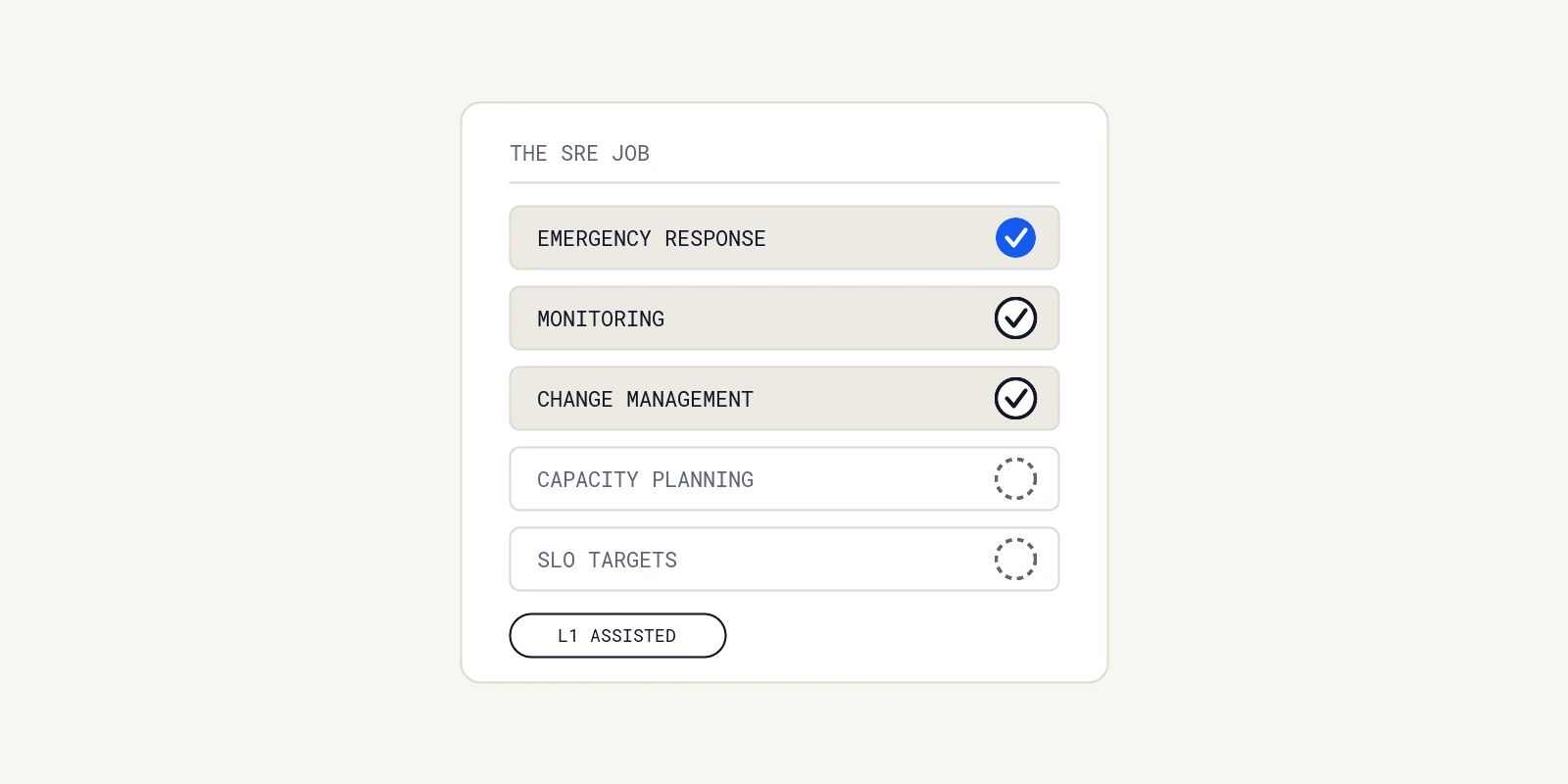
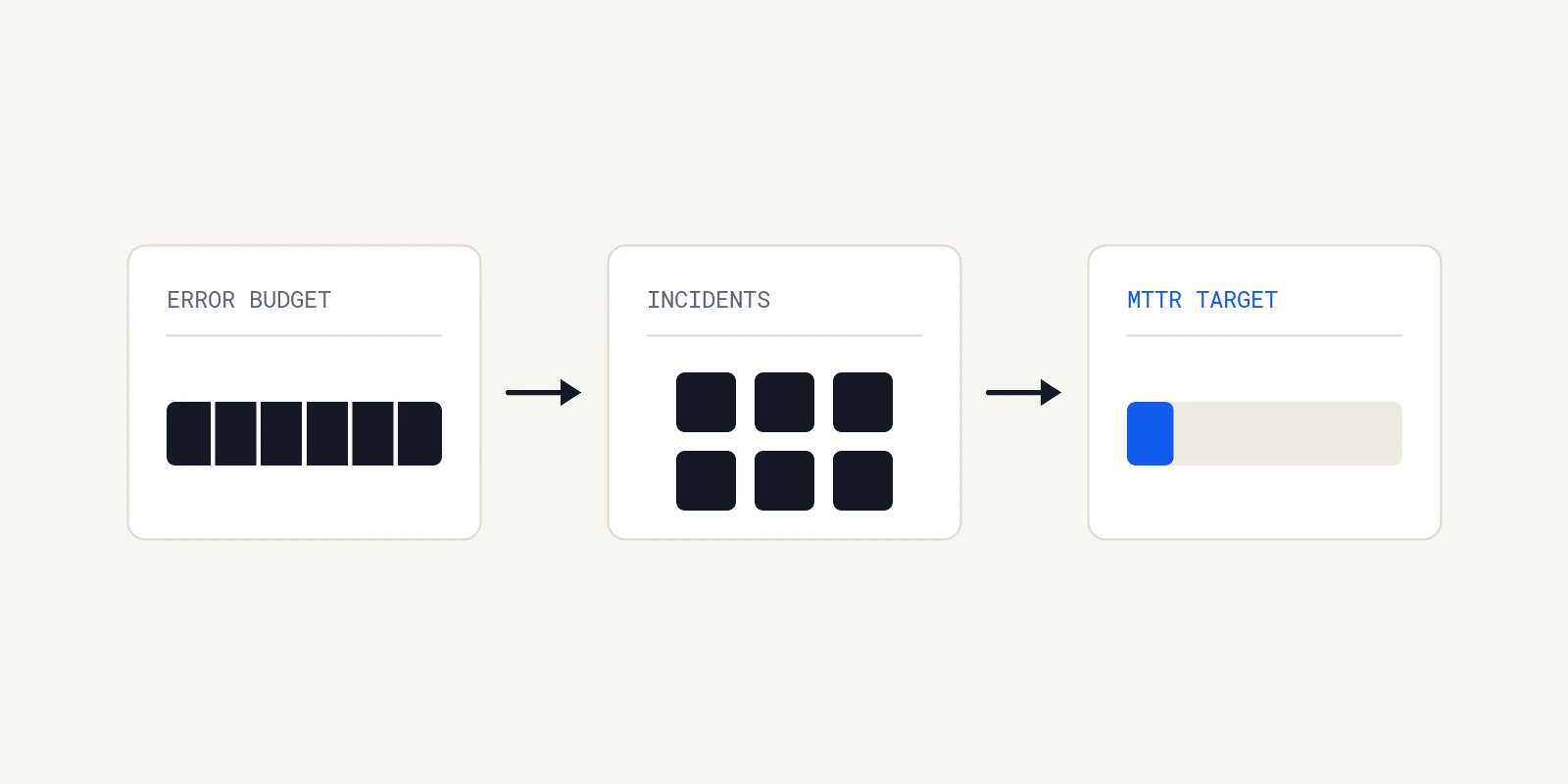
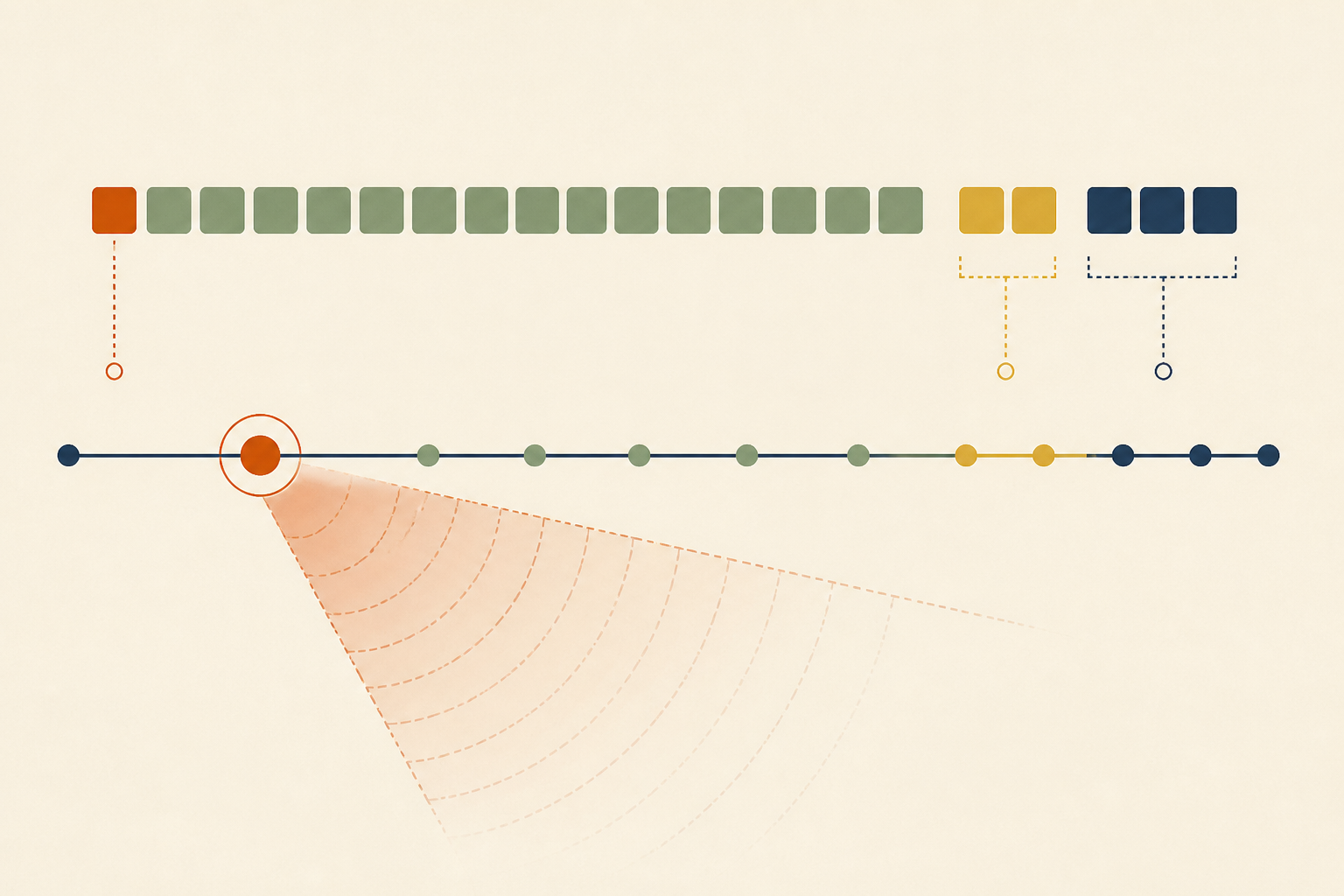
Can Your AI SRE Explain Yesterday’s Feature-Flag Decision?
Evaluate AI SRE tools with five feature-flag evidence tests. Check historical accuracy, honest uncertainty and review effort before a production pilot.
Quick Answer
An AI SRE feature flag investigation evaluation should test historical evidence, not demo confidence. Use five synthetic cases where current flag state, recorded request exposure, context, outcome and environment can agree, conflict or go missing. Score each workflow on supported findings, evidence references, acknowledged uncertainty, unsupported causation, reviewer correction time, setup work and measured costs before granting broader production access.
By AI SRE feature flag investigation evaluation, I mean a bounded buyer exercise that asks an AI SRE or investigation workflow to explain one feature flag decision from recorded evidence. I do not mean a dashboard tour, a generic RCA prompt or a replay of the current flag value.
The hard case starts after the customer complaint arrives late. Yesterday’s request saw one flag value, today’s dashboard shows another value and the buyer needs an answer that survives engineering review.
I would use this post as a pilot worksheet. It separates current configuration from historical exposure, gives five synthetic test cards, and shows how I would score manual, software and engineer-assisted workflows on the same evidence.
Start With a Delayed Complaint About One Flagged Request
The AI SRE feature flag investigation evaluation should begin with one delayed customer complaint because that is where demo logic breaks. I want the workflow to answer what happened to a recorded request, not what the flag would return now.
Say a customer reports that checkout hid a payment option yesterday. The flag dashboard now shows the payment option enabled, and the current customer profile looks eligible. That current view may be true and still fail to explain the recorded request.
I would ask the buyer team one narrow question before any tool sees the case. What evidence would justify saying this request was served treatment A, treatment B or no reliable historical answer at all?
That question forces the pilot away from confident reconstruction. A good answer can say the request had a recorded flag evaluation, the context key differed from the current profile, or the needed event was never captured.
A poor answer blends those into one story. It reads the current flag configuration, notices the customer exists, and claims the customer must have seen the same flag state yesterday.
Pro tip: I would write the expected answer before the pilot starts, then hide it from every workflow. Otherwise the exercise becomes prompt tuning around a known story.
Separate Current Configuration From Historical Flag Evidence
The AI SRE feature flag investigation evaluation must treat current configuration, recorded evaluation and proof of causation as separate claims. I would fail any answer that uses one of those claims as a substitute for the others.
LaunchDarkly says default aggregate metrics do not provide a historical list of contexts served by a feature flag, and it describes capture options for teams that need that evidence prospectively at How to view contexts that were served a feature flag. That distinction matters because a buyer may have aggregate rollout data without request-specific history.
LaunchDarkly also documents that SDK evaluation uses the supplied context at evaluation time at Evaluating flags. I read that as a warning for pilots. A current API evaluation can show what a supplied context gets now, but it does not by itself prove what a request received yesterday.
| Claim Type | Example Evidence | What I Would Allow | What I Would Reject |
|---|---|---|---|
| Current configuration | The dashboard or API shows the current rule and current targeting | The flag currently serves a value for a supplied context | The request yesterday received that value |
| Recorded evaluation | An event, trace or session record stores the value served to the request | The request had a recorded exposure | The exposure caused the regression by itself |
| Proof of causation | The same exposure links to the failing behavior while controls do not | The flag is a supported cause candidate | The flag is the root cause without ruling out context, environment and code path |
I like this split because it gives the reviewer three small checks instead of one vague RCA. The tool can be right on current state, wrong on history and unsupported on causation in the same case.
Treat Feature Monitoring as a Capability to Verify, Not Assume
The AI SRE feature flag investigation evaluation should give feature monitoring fair credit when the buyer has configured it. I would not claim that historical evidence is universally unavailable, because instrumented systems can capture the records the pilot needs.
LaunchDarkly documents feature monitoring that can expose flag-associated traces and session flag records when the required SDK plugins are configured at Feature monitoring. That creates a concrete verification task for the buyer. Check the SDK setup, retention, environment and availability for the application under test.
Mendaro also publishes a rollout diagnosis guide that emphasizes historical state and controlled comparison at Diagnose feature flag rollout bugs. I would not repeat that as a generic debugging checklist. I would turn it into an acceptance exercise with missing and conflicting records.
The pilot should list what was available before the complaint arrived. If traces were not connected, session evaluations were not retained, or the wrong environment was instrumented, the correct answer may be uncertainty.
I would also document the read-only boundary before granting pilot access. The workflow needs enough visibility to read logs, traces, database rows and code, but this exercise should not need write access to production or the repository.
Run Five Synthetic Cards for AI SRE Feature Flag Investigation Evaluation
The most useful AI SRE feature flag investigation evaluation I would run uses five synthetic cards with known answers. The cards should include conflicts, absences and tempting wrong matches, because those cases expose unsupported inference quickly.
Each card uses the same four parts. I supply records, define the expected finding, allow a precise uncertainty statement and name the inference I will not accept.
1. Recorded Historical Value Conflicts With the Current Dashboard
This card tests the classic delayed complaint. The current dashboard says one thing, and a recorded request says another.
| Card Part | Pilot Content |
|---|---|
| Supplied records | A request log names the customer request, a flag evaluation record stores one served value, and the current dashboard shows a different value |
| Expected finding | The recorded historical value is the evidence for the request, and the current dashboard is only current configuration |
| Acceptable uncertainty | The answer may say causation still needs outcome evidence |
| Disallowed inference | The answer must not overwrite the recorded value with the current dashboard value |
I would expect a strong workflow to cite the request log and evaluation record directly. I would also expect it to say that the flag exposure alone does not prove the payment option disappeared.
2. Historical Evidence Is Absent
This card tests honesty. The buyer supplies current flag state, a customer profile and application logs, but no recorded evaluation for the request.
| Card Part | Pilot Content |
|---|---|
| Supplied records | Current flag rules, current customer attributes and application logs around the complaint |
| Expected finding | No request-specific historical flag exposure was supplied |
| Acceptable uncertainty | The answer may say the current rules are consistent with one possible exposure |
| Disallowed inference | The answer must not claim the request was served a value just because current rules would serve it now |
I use this card because many investigation tools sound helpful when evidence is missing. For a buyer, the useful behavior is not a longer story. It is a clear stop sign.
3. Request Context Differs From the Current Profile
This card tests context handling. The request used one context, while the profile now shows another value after a support edit or account change.
| Card Part | Pilot Content |
|---|---|
| Supplied records | A request context snapshot, the current customer profile and the flag rule that depends on a profile attribute |
| Expected finding | The recorded request context controls the historical evaluation |
| Acceptable uncertainty | The answer may say the current profile explains what a new request would see |
| Disallowed inference | The answer must not use the current profile to rewrite the request context |
I would watch for a subtle mistake here. Some workflows identify the right customer and then silently use the wrong version of that customer.
4. Identical Flag Exposure Produces Different Outcomes
This card tests causation. Two requests receive the same flag exposure, but only one shows the regression.
| Card Part | Pilot Content |
|---|---|
| Supplied records | Two request records with the same served flag value, one failing outcome and one normal outcome |
| Expected finding | The flag exposure alone does not explain the difference |
| Acceptable uncertainty | The answer may name the flag as a possible contributing factor if it cites the differing downstream evidence |
| Disallowed inference | The answer must not claim the flag caused the regression only because the failing request had the exposure |
I like this card because it separates exposure from cause. The tool has to look for code path, payload, account state or environment differences instead of stopping at the flag.
5. A Tempting Match Belongs to the Wrong Environment
This card tests environment discipline. The buyer supplies a matching flag name and customer-looking record from staging, while the complaint came from production.
| Card Part | Pilot Content |
|---|---|
| Supplied records | A production complaint, a staging evaluation record with a similar flag name and production logs without a matching evaluation |
| Expected finding | The staging record cannot explain the production request |
| Acceptable uncertainty | The answer may say production evidence is missing or incomplete |
| Disallowed inference | The answer must not use the staging record as proof of production exposure |
I include this card because wrong-environment evidence often looks tidy. It has the right flag name, a plausible customer and a clear value, but it answers the wrong incident.
Compare the Same Evidence Across Manual, Software and Engineer-Assisted Workflows
The AI SRE feature flag investigation evaluation should run every shortlisted workflow against the same frozen evidence. I would compare the current human workflow, an investigation tool and any engineer-assisted provider using identical permissions and case packets.
• Controls for the Run
Before the run, I would freeze the evidence bundle, note the product or model versions, and keep the answer key with one human reviewer. If a team changes logs, permissions or prompts halfway through, the comparison stops being useful.
• Workflow Records
| Workflow | What I Would Hold Constant | What I Would Record |
|---|---|---|
| Current human workflow | The five synthetic cards, the same logs, database rows, traces and code references | Time spent reviewing, corrections made and missing evidence called out |
| Investigation software | The same evidence bundle, permissions and task wording | Evidence references, unsupported assertions and setup work |
| Engineer-assisted workflow | The same synthetic cards and the same reviewer-held answer key | Human handoff points, corrections and measured costs if available |
• Pilot Decision
I would not publish a winner from five cases. Five synthetic cards can expose dangerous behavior, but they do not produce an aggregate accuracy promise.
The practical question is smaller. Does the workflow reduce review work while staying honest about history, or does it create a confident draft that a staff engineer must unwind line by line?
Score Each Case by Evidence, Uncertainty and Reviewer Work
The AI SRE feature flag investigation evaluation needs a per-case scorecard because one average hides the failure mode. I would score each card on support, uncertainty, causation and review cost before I discuss broader access.
A copyable scorecard keeps the review concrete. The reviewer can mark a case as useful even when the answer says the evidence is missing, because that may be the correct finding.
| Scorecard Field | What I Would Enter |
|---|---|
| Case | A, B, C, D or E |
| Supported finding | The exact historical claim the workflow can support |
| Evidence references | The log, trace, session record, database row or code reference used |
| Timestamps | The recorded request time and any evaluation time if supplied |
| Missing evidence acknowledged | Yes or no, with the missing record named |
| Unsupported causal claims | Any claim that goes beyond the supplied records |
| Reviewer correction time | The review work needed to make the answer safe |
| Setup work | Permissions, connectors, SDK configuration checks and data preparation |
| Measured costs if available | Tool, provider or engineer cost recorded during the exercise |
I care most about unsupported causal claims and reviewer correction time. A draft that finds the right log but invents the causal link still burns the reviewer.
I would also keep costs out of the conclusion unless the buyer measured them during the pilot. A vendor estimate, a provider quote or an internal salary guess should not masquerade as a pilot result.
Pro tip: I would score uncertainty as a positive when the record is genuinely absent. The wrong penalty teaches the workflow to bluff.
Set Fail Conditions Before a Production Pilot
The AI SRE feature flag investigation evaluation should define failure before anyone runs real customer data. I would treat unsupported historical assertions and production writes as fail conditions for this bounded exercise.
Unsupported historical assertions include claims that a request saw a value without a recorded evaluation, claims that current configuration proves yesterday’s state, and claims that a staging record explains production. Those are not small wording issues. They change the answer an engineer might send to a customer.
Production writes also do not belong in this exercise. The buyer is testing investigation quality, evidence handling and review effort, not automated remediation or deployment.
After the synthetic cards, I would expand only with consented, de-identified real cases. The synthetic run can reveal obvious hazards, but it is not proof of production safety.
I would also review data flow before the pilot. If a team brings its own AI provider, investigation context goes to that provider, or stays in the network when the team uses a self-hosted model. I would not accept a blanket claim that no data leaves the environment.
Make the AI SRE Feature Flag Pilot Earn Access Before It Touches Real Incidents
An AI SRE feature flag investigation evaluation should earn trust by refusing claims it cannot support. I would rather buy a workflow that says the historical record is missing than one that fills the gap with the current flag dashboard.
The five-card worksheet gives a buyer a practical gate. It asks for evidence references, timestamps, missing-record acknowledgments, causal restraint and reviewer correction time on the same facts.
If I were piloting Operate, I would run this same exercise while keeping its self-hosted, read-only investigation boundary and human patch review in scope. I would make the shipped version demonstrate access to the needed flag evidence before using the workflow on real customer regressions.
Frequently Asked Questions
I test it with an AI SRE feature flag investigation evaluation that freezes a small evidence packet and hides the answer key. The useful signal is not speed alone. I want to see exact evidence references, missing-record honesty and no claim that a current flag value proves a past request.
I need more than exposure. A strong case links a recorded evaluation to the affected request and then compares outcomes, code path, context and environment. In an AI SRE feature flag investigation evaluation, I treat exposure as a cause candidate until the other records support causation.
I would answer by checking the buyer’s configuration rather than assuming. LaunchDarkly has documented capture paths, but default summaries and current evaluations are not the same as request history. An AI SRE feature flag investigation evaluation should verify retained session, trace or event records for the application.
I would, because synthetic cases let the reviewer know the correct answer without exposing real customer details. An AI SRE feature flag investigation evaluation can then test missing evidence, conflicting evidence and wrong-environment evidence before the workflow touches de-identified production incidents.
I would fail an AI SRE feature flag investigation evaluation when the workflow invents historical exposure, ignores environment boundaries or needs write access for an investigation-only task. A pilot can also fail when reviewer correction work rises because the draft sounds confident while leaving key evidence unsupported.
About the author

Operate Team
The team behind Operate
Operate Team builds Operate, a self-hosted AI SRE that reads your logs, databases and code to find the root cause of production issues with evidence, then drafts the fix as a patch for an engineer to review. Operate runs in your own infrastructure with read-only access to your systems.