You Cannot Instrument a Silent Failure From Inside the Thing That Is Failing
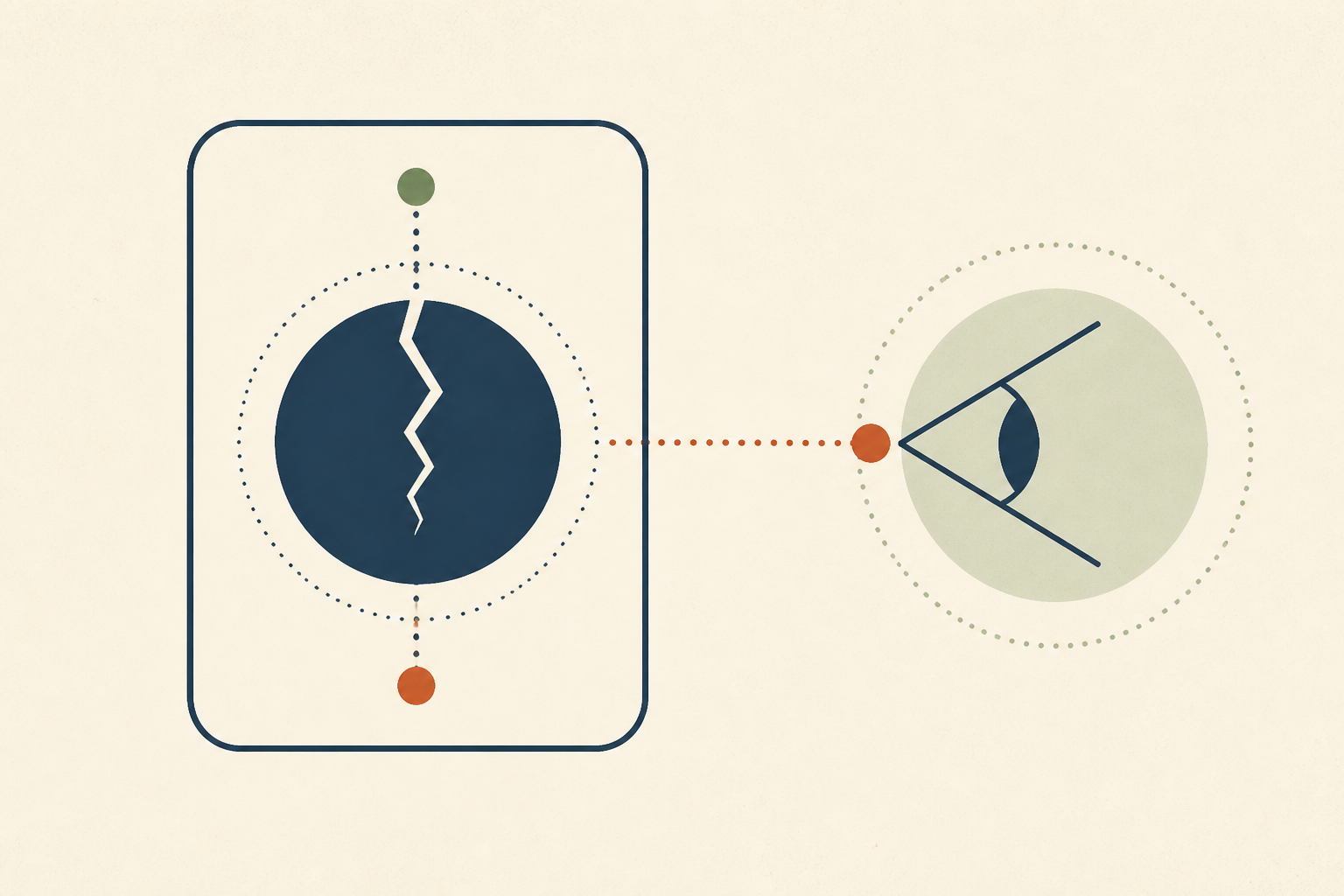
TL;DR: A silent failure is defined by the absence of an expected signal, and absence cannot be emitted by the component that is missing. To detect these, you must move the expectation—and its associated deadline—to an external observer that monitors for what should have happened but didn't.
Seven engineers, eight days, five platforms, one question
Between September 11 and September 18, 2026, seven senior engineers across five different platforms raised the same alarm. They weren’t talking about crashes or 500 errors. They were talking about the void.
On Reddit, u/Yashhh_21 described a webhook processor that simply stopped. No error, no alert, no entry in the dead letter queue—just a Saturday spent realizing work had vanished. On LinkedIn, Siva Reddy detailed automation that swallowed exceptions, leaving a half-configured server in production while the deployment dashboard proudly displayed "Green."
Elsewhere, Esha Mathur investigated a SQL Server query that timed out having done zero work, while IamAroke on X noted the quiet death of background jobs. We even saw this in AI infrastructure, where The AI Network Engineer noted that model swaps often lead to confidently wrong output rather than legible errors.
The common thread? Every one of these practitioners asked some version of: "What should I have logged to catch this?" And the answers they received were almost always: "Add more logging."
Why "add more logging" is the one answer that cannot work
The definition of a silent failure does the heavy lifting here. A silent failure is the absence of an expected effect. Absence is not an event. Nothing emits it.
A worker that has crashed does not log that it has stopped; the process is gone. A swallowed exception does not raise; it is treated as a successful no-op. A cron job that never gets scheduled produces no log line, because the very mechanism responsible for generating that line never executed.
Logging is an act of emission. It requires the component to be alive, aware of its state, and capable of communication. If you are trying to detect the total failure of that component from within the component itself, you are making a category error. This isn't a maturity problem or a budget issue—it is a structural impossibility.
The only thing that detects an absence is an expectation with a deadline
To catch a silent failure, you must adhere to a single principle: The expectation must be held outside the component, and it must be attached to a clock.
Without the clock, your expectation is just a hope. Without the external position, you have a system certifying its own success—the ultimate conflict of interest. As noted by K.L.P. Annagendra, capacity assumptions often hold until they don't, and if there is no external observer measuring the drift, the failure remains invisible until the system collapses.
The four shapes an expectation can take
There are only a few ways to structure an external expectation. Every "missing" event mentioned in the recent chatter could have been caught by one of these four shapes.
1. The Deadline on an Expected Event
Commonly known as a heartbeat or a "dead man’s switch." This is a freshness check on a database table, a last_successful_run timestamp, or a Prometheus absent() alert.
- What it catches: The webhook processor that stopped.
- Blind spot: It cannot see "zombie" work—processes that run on time but perform no actual tasks.
2. The Reconciliation (Intended vs. Observed)
Borrowed from the Kubernetes control loop. You declare what should be true (e.g., "This server is configured with X") and a separate process observes what is true.
- What it catches: The half-configured server behind a green dashboard.
- Cost: Highest to build, but provides the most robust protection.
3. The Conservation Invariant
A simple mathematical check: Work Accepted = Work Completed + Work Failed + Work in Flight.
- What it catches: Queues that quietly drop items without sending them to a Dead Letter Queue (DLQ).
- Insight: According to the AWS community discussions, silent cost drift or configuration defaults (like an unexpected 1024MB memory cap) often hide in the gap between what we think is happening and what the billing invariant reveals.
4. The Second Opinion
Two instruments looking at the same event from different perspectives.
- What it catches: Esha Mathur’s SQL timeout. The query plan said "waiting," but the OS-level wait types said "memory grant denied." The disagreement between the two signals is the alert.
- Use case: Increasingly vital for AI agents where the primary signal (a 200 OK response) is present but the content is wrong.
Key Takeaway: You cannot log your way out of a silent failure; you must instead build an external observer that alerts when a specific expectation fails to meet its deadline.
Who watches the watcher, honestly?
Critics will argue that this creates an infinite regress: what happens if the heartbeat monitor fails? The honest answer is not an infinite chain of observers. It is a short chain with different failure modes at each link, supplemented by periodic "fire drills." You must deliberately break the primary system to ensure the detector fires. If you don't test the absence, you haven't solved the silent failure; you've just moved it.
The real reason this never gets built
If the technical path is clear, why do we keep finding these failures on Saturdays? The reason is organizational.
Because the expectation must live outside the failing component, it usually falls outside the owning team's boundary. It is "nobody's ticket." The team that owns the webhook processor doesn't have the roadmap space to build a cross-service heartbeat monitor, and the platform team doesn't feel the pain of the silent failure.
This is why practitioners reach for logging: it is the only tool they own. But it is the one tool that structurally cannot work for silent failure detection.
A starting checklist
If you want to move beyond "more logging," answer these questions this week:
- What is the longest interval a scheduled job can be dead before a human notices?
- Which queues can lose an item without producing a DLQ record?
- Which deployments report "Success" based only on the exit code of the deployment script?
- Do you have a "Work In vs. Work Out" dashboard for your most critical pipeline?
- Which of your alerts would remain silent if the alerting pipeline itself crashed?
Solving this requires a platform that can observe these gaps without being part of the failing process. Operate addresses this structural gap by watching for swallowed exceptions, stalled jobs, and diverging queue counts from the outside. It investigates these "absences," finds the root cause evidence, and drafts a PR for the fix—all while remaining a self-hosted, read-only observer that ensures your expectations are actually met.
Sources & further reading
- According to Yashhh_21 on Reddit, silent failures in webhook processors often leave no trace in standard dead letter queues.
- According to Siva Reddy, configuration management success should be observed, not just reported by the runner.
- According to Esha Mathur, system-level wait types are often the "second opinion" needed to diagnose silent query timeouts.
- The AI Network Engineer notes that model drift is the new frontier of silent failure.