Ninety-Four Percent Can See What the Agent Did. Forty-Five Percent Can Tell You Whether It Was Right.
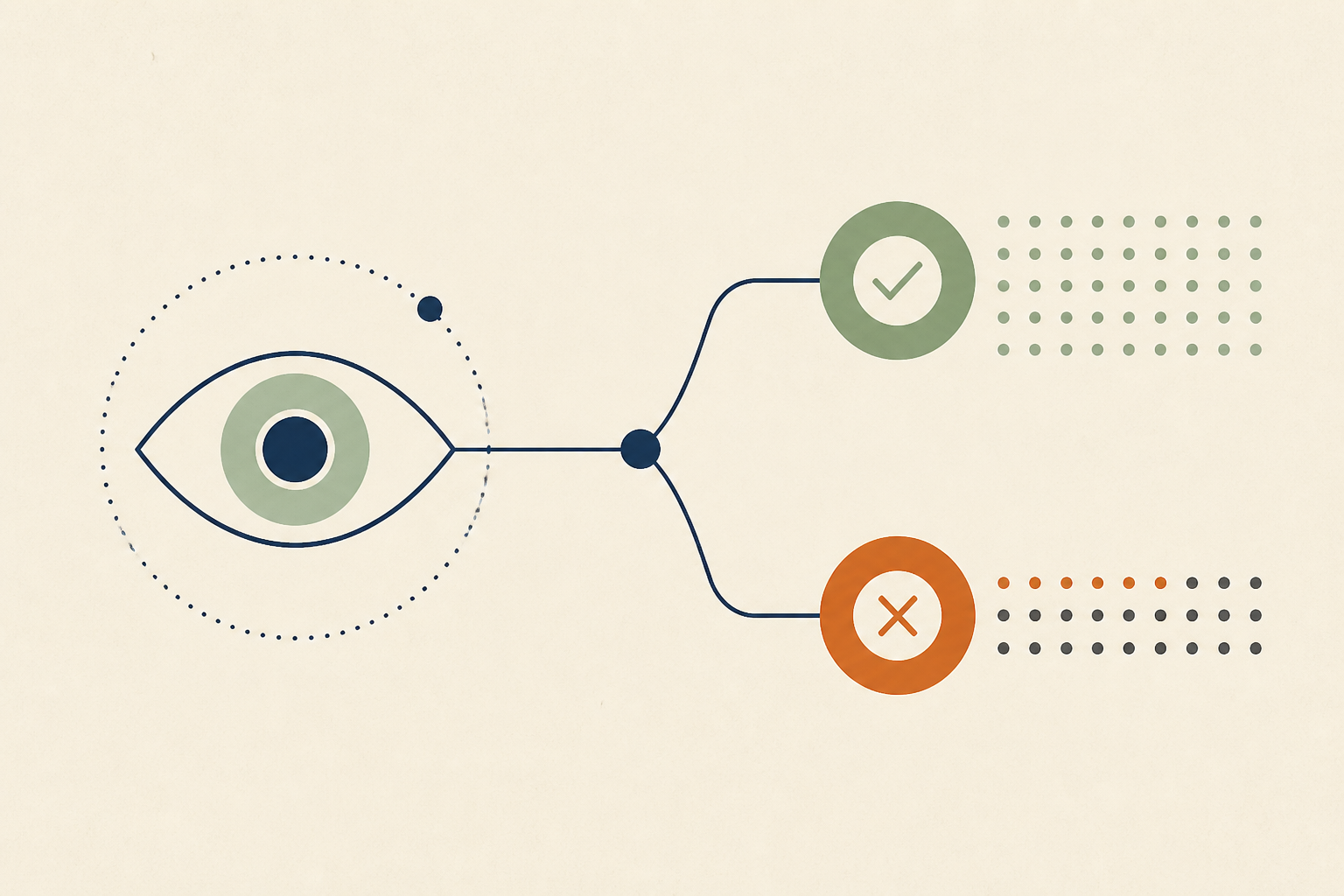
TL;DR: While 94% of teams with AI agents in production have implemented observability, only 44.8% utilize online evaluation to verify if those agents are actually correct. This gap creates a "silent failure" state where traces appear healthy and metrics stay green while output quality degrades undetected for weeks.
The number everyone is quoting, and the two underneath it
The recently published State of Agent Engineering report by LangChain, which surveyed 1,340 practitioners between November 2025 and June 2026, is currently circulating as a success story for AI adoption. The headline figures—89% of respondents using agent observability and 52% performing evaluations—suggest a mature, responsible ecosystem.
However, looking at the production-specific cohort reveals a more precarious reality. Among respondents who actually have ai agents in production:
- 94% have some form of observability.
- 71.5% have implemented full step-level and tool-call tracing.
- Only 44.8% run online evaluations against real traffic.
The methodology warrants a cautious reading: 63% of respondents work in technology and 49% are at companies with fewer than 100 employees. This sample skews toward early adopters and agile teams who are more likely to have instrumented their stacks. Even in this "best-case" demographic, more than half of production agents are operating without any automated check on whether their outputs are correct.
Offline evals and online evals are not two flavors of the same thing
A common misconception in the industry is that "evaluation" is a single checkbox. In reality, offline and online evaluations serve entirely different masters.
Offline evaluation runs against a fixed, versioned test set before deployment. It is designed to catch regressions you have already anticipated. Online evaluation, however, scores live traffic. It is the only mechanism capable of detecting a distribution shift, a retrieval index that has quietly rotted, or the subtle behavioral changes that occur after an upstream model swap. By reporting these as a combined 52.4% "evaluation" rate, the industry is hiding a massive structural risk: teams are testing for yesterday's problems while remaining blind to today's drift.
What a failure looks like when you have traces and no evals
When you have agent observability without agent evaluation, you aren't protected from failure; you are merely granted a front-row seat to watch it happen.
Consider a recent first-hand case documented by Erik Fiala on Substack. His team’s traces looked perfectly healthy—latency was within bounds, error rates were zero, and the spans were green. Yet, the retrieval quality was steadily degrading. Because there was no online evaluation scoring the relevance of the agent’s answers, the system drifted for two weeks before a human noticed.
Key Takeaway: The most dangerous agent failure is not a crash, but a "confidently wrong" output that keeps the monitoring dashboard green while corrupting downstream data.
This is fundamentally worse than a traditional software crash. A crash triggers a page. A silent quality regression does not. By the time a human identifies the trend, the "hallucinated" or incorrect outputs have already been integrated into support tickets, codebases, or executive decisions.
Quality is the barrier. Cost is not.
For the first time, the constraint on ai agents in production has shifted from the CFO's office to the engineering manager's desk. According to the LangChain report, quality is now the top barrier to production for roughly one-third of respondents. Latency follows at 20%, and security concerns jump to 24.9% for organizations with over 2,000 employees.
Crucially, cost has fallen away as a primary concern. The industry has moved from "can we afford this?" to "can we tell if it worked?" Procurement questions, however, have not caught up. Most teams are still evaluating vendors based on token costs and inference speed, rather than the robustness of the evaluation framework provided to catch quality drift.
The same gap is being rebuilt in operations tooling, right now
The AI SRE and "Ops Copilot" category is not immune to this trend. Nearly every operations agent on the market today ships with a beautiful trace view. Very few ship with a meaningful check. We are currently conflating three distinct needs:
- Observability: "Show me your work." (A record of reasoning).
- Verification: "Prove your reasoning is sound." (An independent check on a specific conclusion).
- Evaluation: "Are you getting better or worse over time?" (A longitudinal measurement of correctness).
A trace is simply a narrative. Because large language models are specifically designed to produce plausible narratives, a trace can look entirely logical while being factually untethered from the underlying infrastructure.
What to ask before you put an agent anywhere near production systems
Before deploying an agent to manage production infrastructure, ask these five questions:
- What fraction of its conclusions are checked by something other than its own logic?
- Is the "checker" using the same model version as the agent? (It shouldn't).
- Does anything score outputs against real traffic rather than a static fixture set?
- What is the specific workflow when the agent is confidently wrong?
- What is the human decision point before any system state changes?
What we would want someone to ask us
At Operate, we believe the industry needs to be honest about these gaps. Operate addresses the verification gap by running an independent Verification stage. We use a different model from the one that performed the initial investigation to audit the evidence and root cause.
However, to be truly transparent: that is verification, not evaluation. While our "second-opinion" architecture provides a structural check on individual incidents, it is not a replacement for a long-term evaluation strategy. We encourage teams to ask us the same five questions listed above. Any vendor who points to a trace view as their only answer to "was it right?" is selling you the ability to watch your system fail in high definition.
Sources & further reading
- According to the State of Agent Engineering (LangChain), quality has overtaken cost as the primary hurdle for production AI.
- As noted by Erik Fiala, observability traces can remain green even while an agent's retrieval quality degrades for weeks.
- Braintrust’s guide to agent observability highlights the growing vendor focus on detailed tracing, even as online evaluation remains a secondary priority.